




When a child struggles with attention, reading, impulse control, or learning, parents usually ask the same question before anything else: is cognitive training safe for children? That question matters more than marketing, more than technology, and more than promises. If a method is going to become part of your child’s routine, safety has to come first.
The reassuring answer is that cognitive training is generally considered a non-invasive approach for children when it is used appropriately, with suitable protocols, age-appropriate expectations, and qualified oversight. But the full answer is more useful than a simple yes. Safety depends on how the process is designed, who is guiding it, and whether the child’s needs are being understood correctly from the start.
Is cognitive training safe for children in real practice?
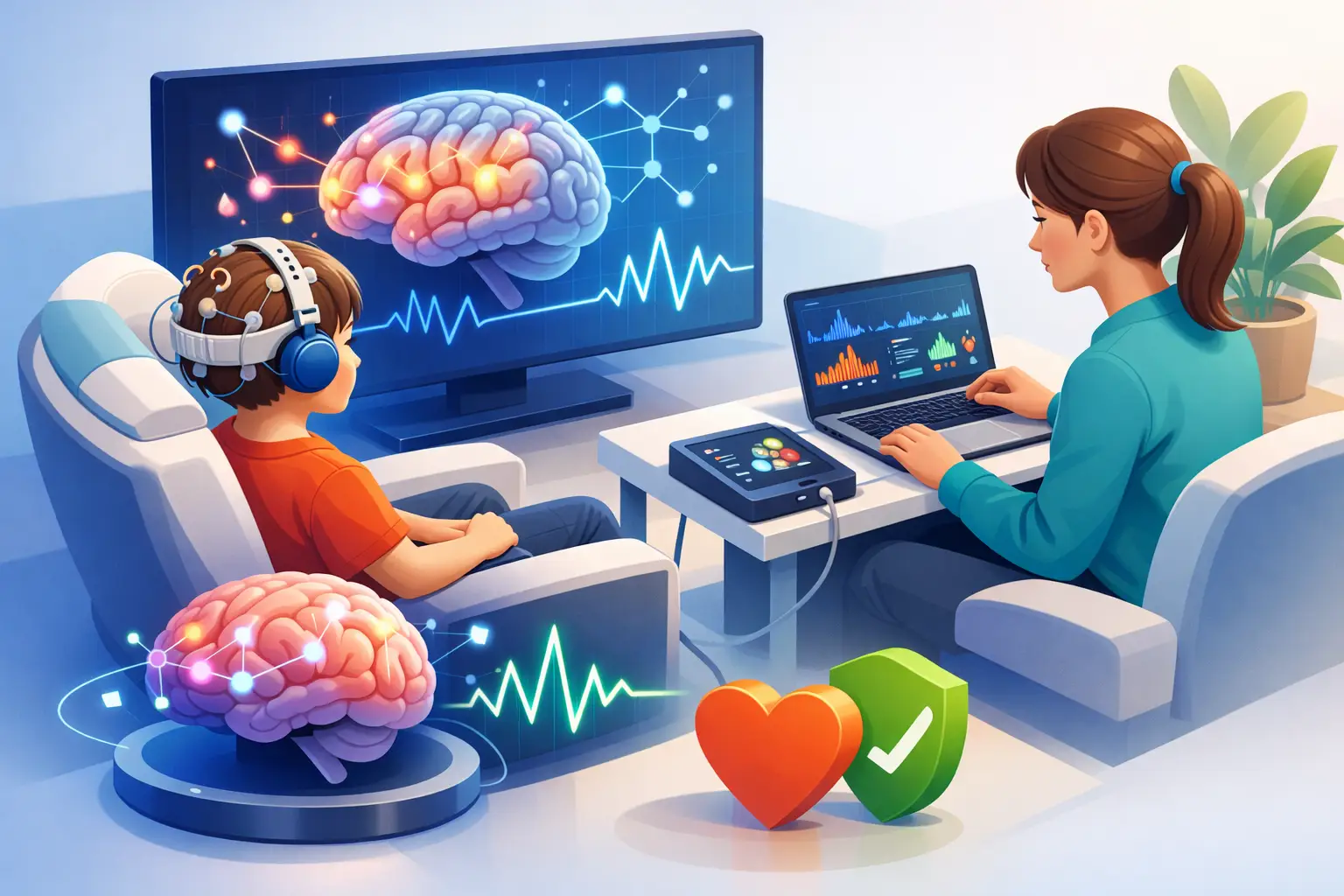
Cognitive training does not deliver electricity into the brain. This is one of the most common misunderstandings parents have when they first hear about EEG-based systems. In standard cognitive training, sensors are placed on the scalp to read brainwave activity. The child then receives visual or auditory feedback in real time based on those signals. In simple terms, the brain is being measured and guided through feedback, not forced.
That distinction is why many families view cognitive training as a safer option to explore within a broader developmental support plan. It is non-invasive, does not involve medication, and is often described as low risk when used correctly. Academic studies and published research have examined cognitive training in children with attention challenges, learning differences, and self-regulation difficulties, and the overall safety profile is considered favorable.
Still, favorable does not mean automatic. A child is not a protocol. Two children with similar attention complaints may have very different cognitive patterns, sensory sensitivities, or emotional responses. A safe experience depends on personalization and monitoring, not just on access to equipment.
Why parents worry – and why that concern is valid
Parents are right to ask hard questions. Children with ADHD, dyslexia, autism-related differences, or learning difficulties often already have demanding schedules. They may be attending school support programs, working with specialists, or managing frustration around homework and confidence. Adding one more routine to a child’s week only makes sense if the family can see what it is for.
Another reason for concern is that neurotechnology can sound more intimidating than it is. Terms like EEG, brain signals, and training protocols can make the process feel highly technical. In reality, safe cognitive training should feel structured, understandable, and calm. Parents should know what is being tracked, why it matters, how progress is reviewed, and what signs suggest a protocol should be adjusted.
The best programs reduce uncertainty rather than increase it. They do not rely on vague claims. They explain the process clearly, set realistic expectations, and measure change over time.
What side effects can happen?
Most children tolerate cognitive training well, especially when sessions are tailored to their age, stamina, and profile. That said, even a non-invasive method can sometimes produce mild and temporary side effects. These may include fatigue, irritability, headache, restlessness, overstimulation, or brief sleep changes after a session.
These effects are usually not dangerous, but they are important. They often signal that the session intensity, duration, or training target needs adjustment. This is exactly why active supervision matters. A safe program should not ignore a child’s feedback or push through discomfort in the name of progress.
There is also a practical form of safety that parents sometimes overlook: emotional fit. Some children are very comfortable with structured screen-based tasks and immediate feedback. Others may get bored, frustrated, or sensory overloaded if the experience is not designed for their developmental level. In those cases, the issue is not that cognitive training is inherently unsafe. The issue is that poor fit can make the process unproductive or unnecessarily stressful.
Who is a good candidate?
Cognitive training is often explored for children who show persistent challenges with attention, focus, impulse regulation, reading-related concentration, academic stamina, or cognitive self-management. It may be especially relevant for families seeking a measurable, technology-supported, and non-invasive option.
Even so, suitability should never be assumed from a label alone. A diagnosis does not tell the whole story. Sleep quality, sensory profile, emotional regulation, motivation, learning history, and home routine all affect whether cognitive training is likely to be a positive experience.
This is where assessment becomes part of safety. Before training begins, there should be a clear understanding of the child’s baseline functioning and current difficulties. In strong programs, progress is not guessed. It is tracked through observed changes, structured feedback, and objective measures where possible.
What makes cognitive training safer for children?
The safest cognitive training experiences usually share the same core features. First, the method is non-invasive and age-appropriate. Second, the process starts with a careful evaluation instead of a one-size-fits-all plan. Third, the child’s responses are monitored consistently so the training can be adapted.
Qualified guidance is central here. Parents should feel comfortable asking who reviews the child’s data, how protocols are selected, what happens if the child becomes tired or dysregulated, and how progress is documented. Clear answers are a good sign. Overpromising is not.
Technology matters too, but technology alone is not enough. An EEG headset or app cannot replace interpretation, context, and responsible decision-making. Safe use comes from the combination of reliable tools, expert oversight, and a program built around the child rather than around generic claims.
At Auto Train Brain, this is one reason home-based cognitive training is paired with expert support and measurable follow-up rather than being presented as a standalone gadget. For families, that structure can make the difference between simply trying a tool and using a system responsibly.
Is cognitive training safe for children with ADHD, dyslexia, or autism-related differences?
This is often the real question behind the broader one. Parents are not usually asking about children in general. They are asking about their child.
For children with ADHD, safety discussions often include attention span, frustration tolerance, and whether a child can engage consistently enough for training to be productive. For children with dyslexia or reading difficulties, the focus may be on cognitive load, fatigue, and whether attention regulation support can complement existing educational work. For autistic children or children with sensory differences, comfort, routine, and sensory sensitivity become especially important.
In each of these groups, cognitive training can still be appropriate, but the protocol and delivery need to reflect the child’s profile. A child who is easily overstimulated may need shorter sessions and closer observation. A child with low motivation may need a more engaging and gamified structure. Safety is not only about avoiding harm. It is also about designing an experience the child can tolerate and benefit from.
Questions parents should ask before starting
If you are evaluating a program, ask practical questions. How is the child assessed before training starts? How are sessions adapted if the child seems tired, agitated, or uninterested? What signs show that the approach is working well, and what signs suggest it should be modified? How often is progress reviewed with the family?
You should also ask what the program does not promise. Any provider who presents cognitive training as a guaranteed fix for every learning or attention challenge is making the conversation less safe, not more. Structured support should feel confident, but also honest about variability. Some children respond quickly. Others improve gradually. Some need cognitive training to sit alongside educational and behavioral supports rather than act alone.
The safest mindset is informed, not fearful
Parents do not need perfect certainty before making a decision, but they do need clarity. Cognitive training is generally non-invasive for children because it is non-invasive, does not force brain activity, and can be delivered in a structured, measurable way. The real safety question is whether the program respects the child’s individual profile and monitors the process with care.
A thoughtful parent is not being difficult by asking for evidence, oversight, and clear expectations. That is exactly the mindset that protects children best. When safety, personalization, and progress tracking come together, cognitive training becomes more than an interesting idea. It becomes a credible, calm, and family-friendly option for supporting attention, learning, and cognitive development.
If you are considering it for your child, the best next step is not to chase bold claims. It is to choose a program that takes your child seriously from the very first conversation.