




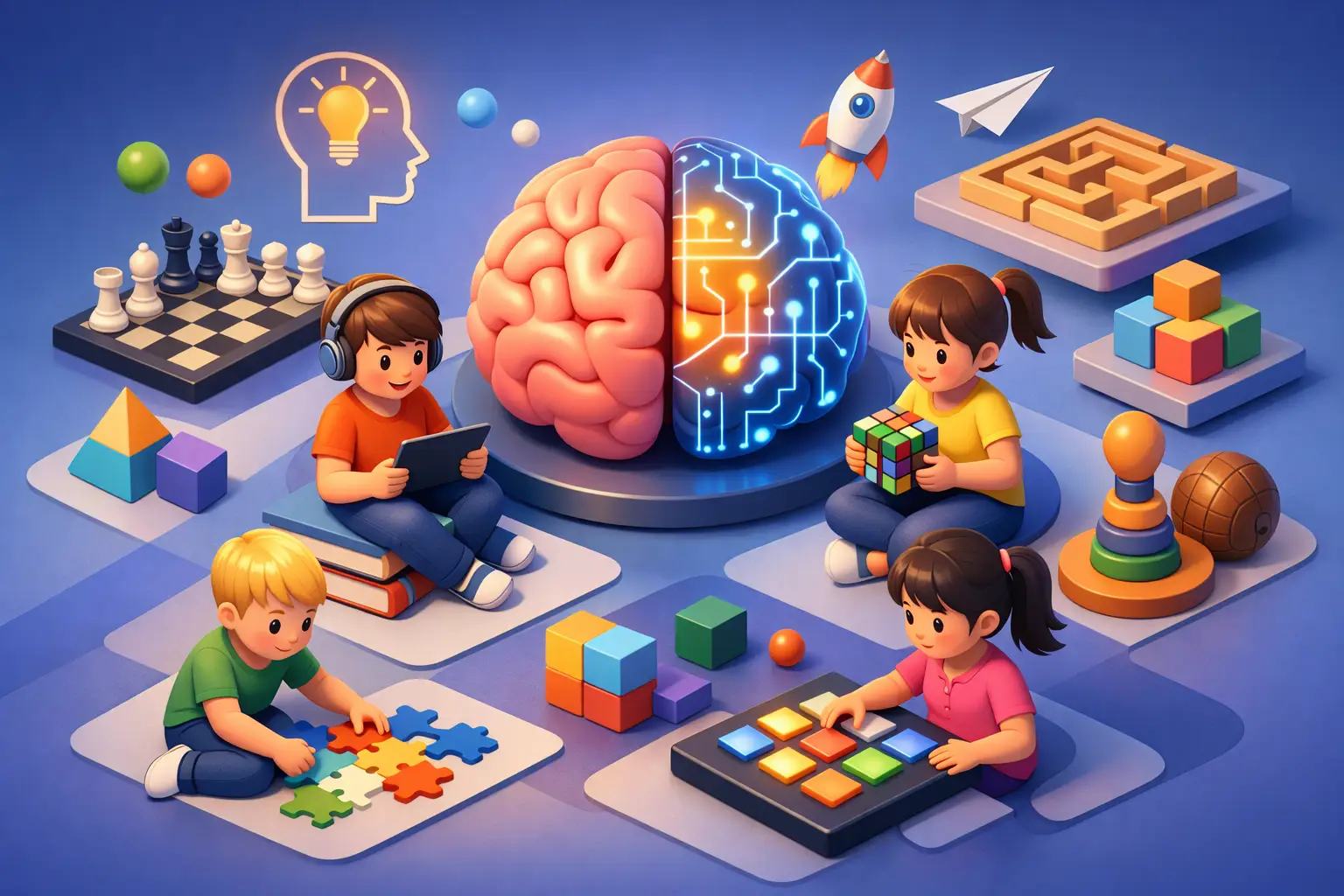
Some kids can sit with a book, follow instructions, and move from one task to the next without much friction. Others lose focus in minutes, skip words while reading, forget what they just heard, or melt down when schoolwork piles up. When that happens, parents start searching for the best brain training for kids, not because they want a trend, but because they want something measurable, safe, and worth their child’s effort.
The hard part is that “brain training” is used for very different tools. Some programs are little more than screen games. Others are built around cognitive science, structured repetition, progress tracking, and targeted support for attention, working memory, processing speed, and reading-related skills. The difference matters. A child who struggles with focus, dyslexia, ADHD-related symptoms, or learning difficulties does not need more random stimulation. They need the right type of training, delivered consistently, with clear goals and objective feedback.
What the best brain training for kids actually means
The best brain training for kids is not the one with the brightest graphics or the biggest promise. It is the one that matches the child’s profile and works on the skills that are limiting daily life. For one child, that may be sustained attention. For another, it may be visual tracking, auditory processing, working memory, or cognitive flexibility.
This is where many families get stuck. They look for a single solution when the real question is more precise: what is getting in the way of learning right now? If a child cannot hold attention long enough to complete instructions, memory drills alone will not solve the problem. If reading is slow and effortful, a general puzzle app may offer entertainment but not meaningful progress.
Strong brain training has a few shared features. It is based on known learning and neuroplasticity principles. It gives the child feedback in real time or close to it. It increases challenge gradually instead of overwhelming the child. It tracks change over time. And it supports transfer into real-world functions like reading, homework completion, classroom behavior, and confidence.
Not all brain training is created equal
Parents are often shown two extremes: either simple educational games or highly technical systems that feel intimidating. In practice, the best option usually sits in the middle – engaging enough for children to stick with, but structured enough to produce measurable cognitive gains.
Game-based cognitive activities can be useful when they target specific skills and are used with consistency. They may support working memory, response inhibition, visual attention, and processing speed. But there is a trade-off. If the activity is too game-like and not skill-specific enough, children may get better at the game without improving the everyday skill the family cares about.
More advanced approaches, including EEG-based neurofeedback and AI-supported cognitive assessment, can add something many families are missing: objective data. Instead of guessing whether a child is “trying harder,” parents can monitor patterns in attention and performance over time. That creates a more reliable path for decisions and helps reduce the emotional uncertainty that often surrounds learning struggles.
Brain games can help, but only in context
There is nothing wrong with age-appropriate brain games. For some children, they are a practical entry point. They can improve task persistence, train quick responding, and build tolerance for structured mental effort. But they work best when they are part of a larger strategy, not the entire strategy.
If a child has signs of dyslexia, ADHD, autism-related attention challenges, or broader learning difficulties, families should be cautious about expecting generalized apps to do all the heavy lifting. Children with these profiles often benefit more when training is paired with assessment, progress monitoring, and expert guidance.
Why feedback matters so much
Children improve faster when they can connect their effort to a result. Feedback helps the brain adjust. In cognitive training, that feedback might be visual, auditory, performance-based, or neurophysiological. The more specific the feedback, the easier it is to shape attention and learning in a consistent direction.
That is one reason evidence-informed neurotechnology has gained attention among families looking for non-invasive, side-effect-free support. When a child receives immediate feedback linked to attention or cognitive regulation, training becomes more than repetition. It becomes guided learning.
How to choose the best brain training for your child
Start with function, not marketing. Ask what is hardest for your child in daily life. Is it staying seated, finishing homework, remembering instructions, reading accurately, understanding what they read, or shifting between tasks without frustration? The answer should guide the type of training you consider.
Next, look for measurement. A program should give you more than encouragement. It should show patterns, progress, and areas that still need work. Families often stay with ineffective tools too long because they never had a baseline and never saw meaningful data.
Then consider dosage and consistency. Even excellent training will fall short if it is too complicated to maintain. Home-based models can be especially valuable for busy families because they reduce travel friction and make repetition easier. Consistency is not a minor detail. In cognitive development, it is often the difference between isolated effort and lasting improvement.
Finally, think about fit. A 6-year-old with short attention span needs a different experience than a 14-year-old managing academic pressure and low confidence. The best brain training is age-appropriate, emotionally manageable, and realistic for family routines.
What structured brain training tends to include
Science-backed programs usually focus on core cognitive processes rather than vague claims about becoming “smarter.” That means targeting attention control, working memory, inhibition, processing speed, reading-related visual skills, or cognitive flexibility. These are the functions that shape school performance and everyday independence.
They also tend to use structured progression. A child starts at an achievable level, experiences success, and gradually faces higher demands. This matters because children who already feel defeated by school do not need more experiences of failure. They need challenge calibrated to capacity.
The most credible options also avoid exaggerated promises. No ethical program can guarantee the same outcome for every child. Progress depends on the child’s baseline profile, consistency of use, coexisting learning needs, sleep, emotional state, and school demands. Still, measurable improvement is possible when the method is targeted and sustained.
When neurofeedback and cognitive assessment make sense
For families who have tried worksheets, tutoring, reward charts, and general apps without enough progress, neurofeedback and cognitive assessment may offer a more precise next step. These approaches are especially relevant when the concern is not simply knowledge, but attention regulation, reading efficiency, or broader cognitive performance.
EEG-based neurofeedback uses brain signal patterns to provide immediate feedback during training. The goal is not passive observation. It is active learning through repeated, guided practice. For many parents, the appeal is clear: the process is non-invasive, safe, and designed around measurable change.
AI-supported eye tracking and cognitive assessment can also add clarity by showing how a child attends to information, tracks text, or sustains visual focus. That kind of objective insight can help families stop guessing and start targeting the right bottleneck.
In this space, integrated ecosystems stand out because they combine training, assessment, educational support, and child-friendly digital experiences instead of treating each challenge in isolation. Auto Train Brain is one example of that model, bringing together EEG-based neurofeedback, AI-supported evaluation, educational guidance, and gamified cognitive exercises in a format built for real family use.
What parents should expect from good brain training
Good brain training does not usually produce overnight transformation. What it more often produces is something more valuable: a visible trend. A child starts tasks with less resistance. Reading becomes less effortful. Instructions need fewer repetitions. Homework takes less time. Emotional spillover begins to ease because the child is not fighting the same cognitive barriers every day.
That said, progress is rarely perfectly linear. Some children improve quickly in attention but more slowly in reading fluency. Others show stronger emotional regulation before academic performance catches up. This does not mean the process is failing. It means development is uneven, and interpretation should stay grounded in data and daily function.
Parents should also expect active participation. The best programs support the child, but they also support the family with clarity, structure, and realistic expectations. When families understand what is being trained and why, adherence improves, and children tend to feel safer in the process.
The real goal is not a sharper score
The real goal of brain training is not to produce a flashy result on a screen. It is to help a child learn with less friction, feel more capable, and move through school and daily life with greater independence. That is why the best brain training for kids is never just about stimulation. It is about selecting a method that is evidence-informed, targeted to the child’s actual needs, and consistent enough to create measurable change over time.
If you are evaluating options for your child, look past the promises and ask a simpler question: does this approach help me understand my child better, track progress clearly, and support safer, stronger learning in daily life? That question tends to lead families in the right direction.
Auto Train Brain is not a medical device. It does not diagnose, treat, cure or prevent any disease or condition, and it is not a substitute for assessment, diagnosis or care from a qualified professional. Results vary from person to person and are not guaranteed.