


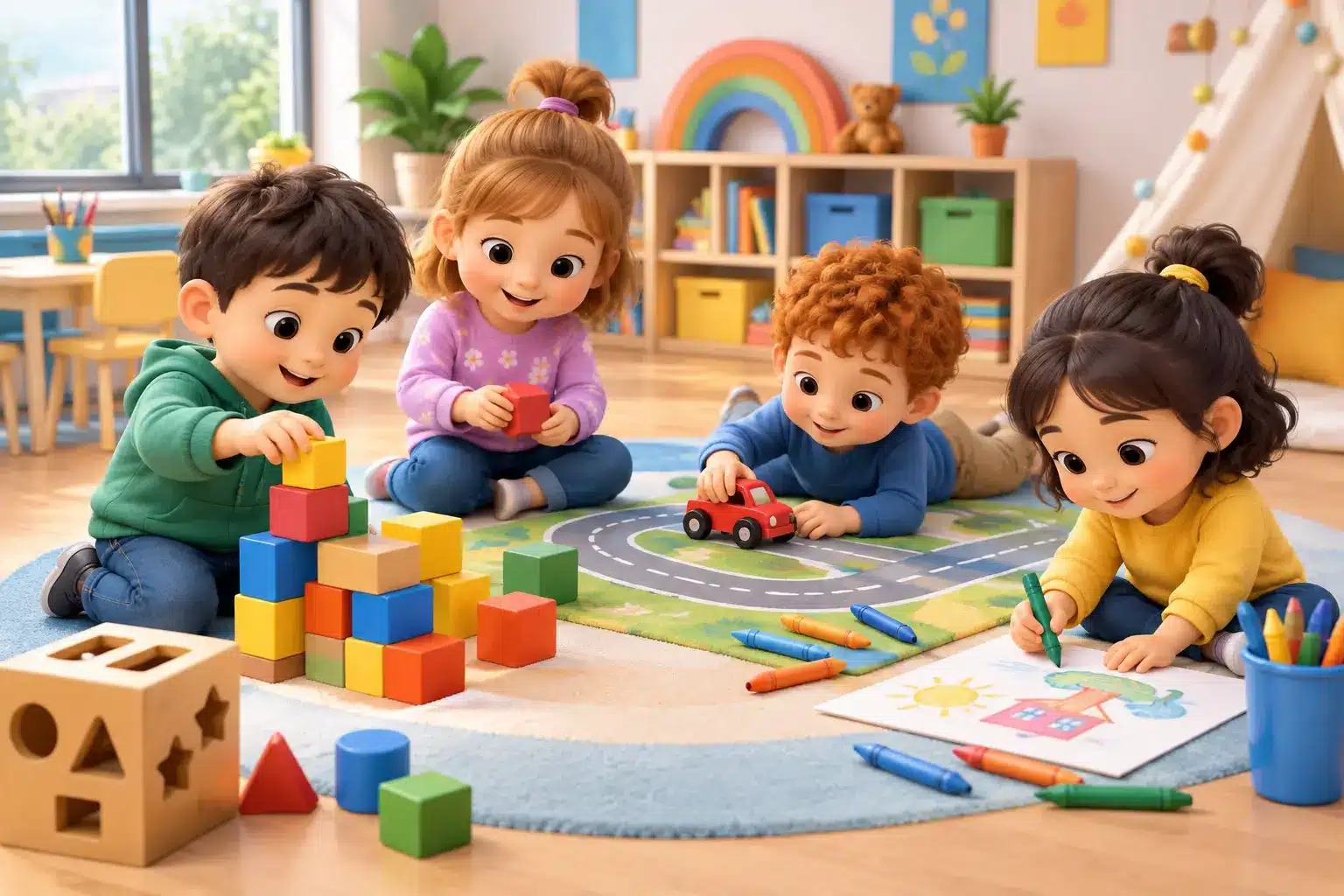
A preschooler who turns every couch cushion into an obstacle course is not necessarily avoiding learning. They may be practicing planning, body awareness, persistence, language, and flexible thinking all at once. That is the heart of okul öncesi eğitim: young children learn most deeply when meaningful play, responsive adults, and everyday routines work together.
For families raising a child with attention differences, learning challenges, autism spectrum differences, or a developing language profile, preschool can bring both hope and worry. Will my child keep up? Will teachers understand them? Is play enough? The most useful question is often simpler: what conditions help my child participate, communicate, and build confidence one small step at a time?
What Preschool Education Is Really Building
Preschool education is not an early version of elementary school. Children ages 3 to 6 are building the foundations that later reading, writing, math, friendships, and independent work rely on. Letter worksheets may have a place, but they are only one small piece of the picture.
A strong early learning environment gives children repeated chances to listen, move, make choices, solve small problems, use their hands, and recover when something does not go as planned. When a child pours water between cups, they explore cause and effect. When they negotiate who gets the red truck, they practice communication and emotional regulation. When they hear a favorite story again and again, they grow vocabulary, memory, and narrative skills.
These experiences can look ordinary from the outside. Their impact comes from repetition, warmth, and the child’s active involvement.
The Skills Beneath the Academic Skills
Many parents understandably focus on whether a child knows colors, numbers, or letters. Those skills matter, but readiness for learning also includes being able to follow a short direction, transition between activities, ask for help, wait briefly, and stay with a task even when it becomes frustrating.
Executive function develops gradually in the preschool years. This includes attention control, working memory, impulse management, and flexible thinking. No child performs these skills perfectly, especially when tired, hungry, excited, or in an unfamiliar setting. The goal is not perfect behavior. It is steady practice in a setting that expects development to be uneven.
For a child who finds group time difficult, sitting still longer is not always the first answer. A shorter activity, a visual cue, a movement break, or a role such as holding the book can create a more reachable starting point. Support works best when it helps the child participate rather than simply asking them to endure.
How to Recognize Meaningful Okul Öncesi Eğitim
A quality preschool program does not need to look identical in every classroom. Some children flourish in a lively group setting; others do better with a smaller class, predictable routines, or more time outdoors. What matters is whether the program sees the child as an active learner rather than a checklist to complete.
Look for teachers who talk with children, not only at them. Notice whether materials are within reach, whether play has a purpose, and whether children are encouraged to try again after mistakes. A classroom can be organized and still leave room for curiosity.
Ask how teachers handle transitions, conflict, sensory needs, and different communication styles. Their answers often reveal more than a colorful curriculum brochure. A supportive program can explain how it observes children, shares progress with families, and adjusts everyday activities when a child needs another path into learning.
Questions Worth Asking During a School Visit
You do not need an education degree to assess whether a setting feels thoughtful. Ask how a typical morning flows, how long children are expected to stay in one activity, and what happens when a child has trouble joining the group. Also ask how teachers communicate with parents and whether home language and family routines are welcomed.
Pay attention to the adults’ tone. Children learn more freely when correction is specific and respectful: “Blocks stay on the floor. Let’s build here,” gives a child information and a next step. Labels such as “naughty” or “lazy” do not.
If your child has known learning or attention differences, share the information that helps adults understand them. You are not asking for lowered expectations. You are helping the team create conditions in which your child can show what they know and practice what is still emerging.
Play Is Not a Break From Learning
Adults sometimes worry that a play-based program will not prepare children for school. The better question is whether the play is rich, supported, and connected to real learning goals.
During pretend play, children take on roles, create rules, use new words, and adapt when the story changes. Building with blocks introduces spatial reasoning, balance, early math, and collaboration. Art activities strengthen hand control while giving children a way to express an idea before they can write it. Outdoor play offers room for movement, risk assessment, cooperation, and sensory exploration.
Free play without adult attention can become chaotic. Highly controlled activities can become passive. The strongest classrooms balance both: children lead their exploration, while adults observe closely, introduce language, model problem-solving, and extend a child’s interest.
What Families Can Support at Home
Home does not need to become a second classroom. Preschoolers benefit more from predictable connection than from packed schedules. A few consistent routines can support learning without turning family time into a performance.
Read one short book and invite your child to point, predict, or retell part of the story. Let them help sort socks, pour ingredients, set napkins on the table, or choose between two shirts. Sing familiar songs in the car. Create a simple goodbye ritual before school. These moments strengthen language, independence, memory, and security because they happen in real life.
When a child struggles with a task, try reducing the demand before removing the opportunity. If putting on shoes feels overwhelming, start with opening the straps together. If drawing letters leads to frustration, draw roads, circles, or favorite animals instead. Small successes create evidence for the child: “I can try.”
This approach is especially valuable for children who have begun to associate learning with pressure. Their confidence grows when adults notice effort, strategy, and progress rather than praising only a finished product.
Screens, Structure, and the Need for Movement
Many families are trying to find a realistic balance with screens. Educational content can offer ideas or entertainment, but it cannot replace the sensory feedback of climbing, cutting paper, building, talking face-to-face, or inventing a game with another child.
Rather than framing screens as a constant battle, establish a few clear boundaries. Keep meals and bedtime calmer when possible, make room for active play every day, and choose predictable moments for digital content instead of using it as the automatic answer to boredom or frustration.
Children also benefit from knowing what comes next. A simple picture routine for breakfast, getting dressed, school, play, dinner, and bedtime can reduce uncertainty. For some children, especially those who find transitions hard, that visual structure can make the day feel more manageable.
When Development Looks Different
Children do not develop in a straight line. One child may tell elaborate stories but resist holding a crayon. Another may recognize every letter yet find peer play confusing. Differences are not evidence of a lack of potential. They are information about where a child may need more time, a different entry point, or coordinated support from the adults around them.
If you have ongoing concerns, write down specific examples: what happens, when it happens, what seems to help, and what makes it harder. Clear observations make conversations with educators more productive than broad labels alone. Families can then decide on practical next steps with the professionals who know the child’s broader needs.
For parents exploring brain-training wellness practices alongside educational routines, the focus should remain on measurable participation in daily life: settling into a task, engaging with learning, following routines, or feeling more confident during practice. Auto Train Brain frames neurofeedback as a science-backed wellness and educational practice that may support these broader goals. Individual results may vary.
Preschool is not a race toward first grade. It is a period when children learn that their questions matter, their efforts can grow, and adults will help them find a way forward. Protect that sense of possibility. It is one of the most valuable things a child can carry into every classroom that follows.