


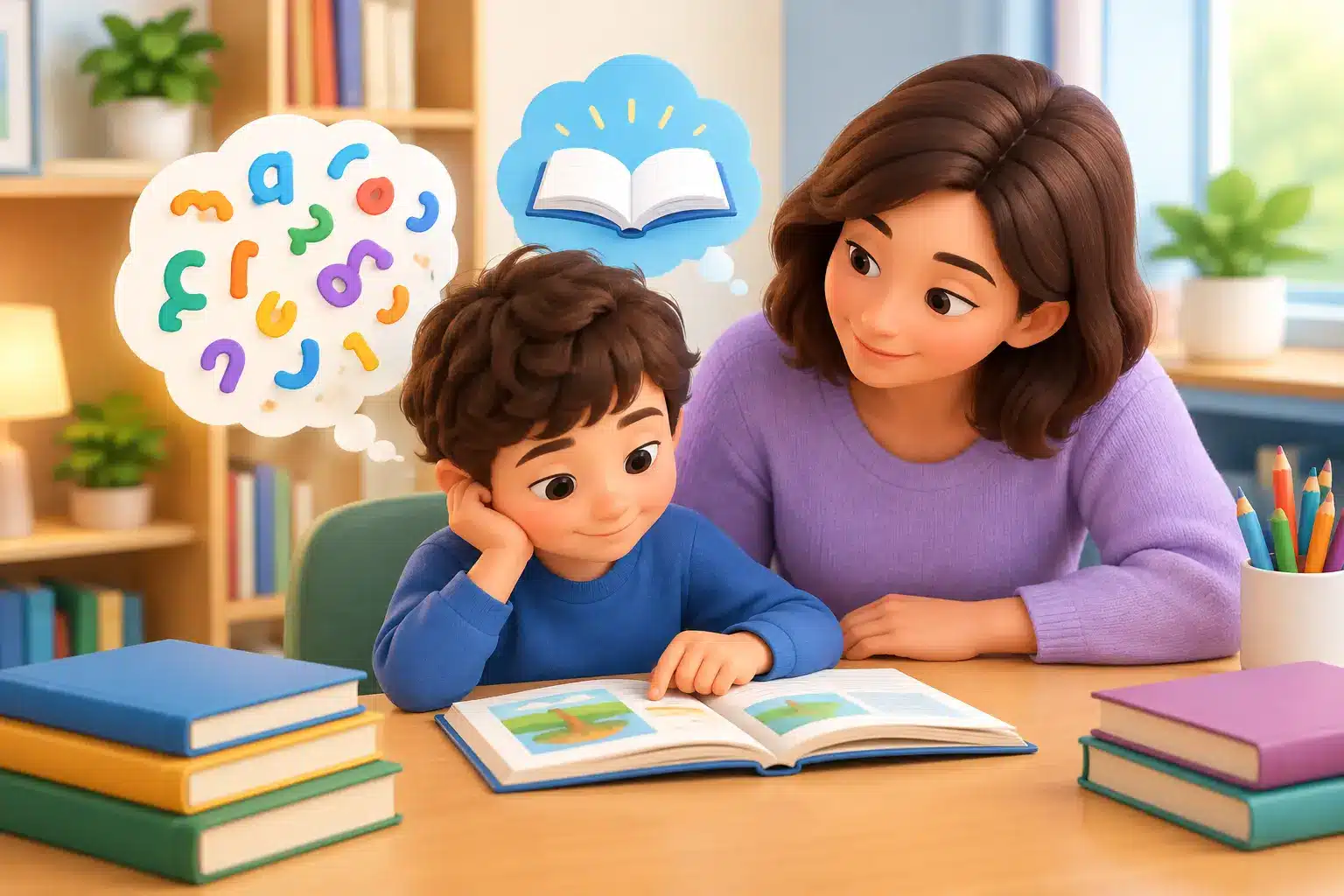
A child who can explain a complex science topic out loud but struggles to read a short paragraph is not being careless or “not trying hard enough.” For many families, that confusing gap is where the question “disleksi nedir?” begins.
Dyslexia is a learning difference that primarily affects how a person processes written language. It can make accurate, fluent word reading, decoding unfamiliar words, spelling, and connecting letters with speech sounds more effortful. It does not measure intelligence, curiosity, creativity, or a child’s potential. In fact, many children with dyslexia have strong reasoning, storytelling, visual thinking, and problem-solving abilities that may be easy to miss when schoolwork is centered on fast reading and written output.
Understanding what dyslexia is – and what it is not – gives parents a clearer starting point. The goal is not to label a child by a challenge. It is to notice how they learn best, reduce unnecessary frustration, and help them access the right educational support.
Disleksi Nedir and Why It Looks Different in Every Child
Dyslexia is often described as a language-based learning difference. The brain may process the sounds within words, letter patterns, and written symbols differently. Because reading is built from several connected skills, the experience can vary widely from one child to another.
One child may read slowly and guess at longer words. Another may read aloud smoothly but have difficulty understanding what they just read because so much energy goes into recognizing each word. A third may be highly verbal yet struggle with spelling, sequencing letters, or remembering multiplication facts.
That variation matters. There is no single “dyslexia profile,” and there is no useful comparison point in a sibling, classmate, or friend. A child’s age, language exposure, school demands, attention patterns, and strengths all shape what families see at home.
Dyslexia is also not caused by low motivation, a lack of intelligence, or parenting choices. It is not simply seeing letters backward, although letter reversals can appear in early writing for many children with and without dyslexia. The more meaningful pattern is persistent difficulty connecting spoken and written language despite appropriate instruction and practice.
Common Signs Parents May Notice
Early signs can be subtle. Preschool and kindergarten children may have trouble learning rhymes, clapping out syllables, remembering the names of letters, or hearing the first sound in a word. These signs alone do not define dyslexia, but patterns that continue over time deserve attention.
As reading demands increase, families may notice that homework takes far longer than expected. A child might avoid reading aloud, become upset when asked to spell, lose their place on a page, or use context and pictures to guess words instead of sounding them out. They may know the answer when speaking but struggle to show that knowledge in writing.
In older children and teens, the challenge can become less visible but no less real. They may read accurately at a slower pace, need extra time for written assignments, find note-taking exhausting, or avoid classes that require a heavy volume of reading. Some begin to believe they are “bad at school,” even when their ideas are thoughtful and advanced.
Watch for patterns rather than one difficult afternoon. Fatigue, a new classroom routine, stress, or a temporary lapse in confidence can affect any learner. Consistent struggles across reading, spelling, and written work are more informative than an isolated mistake.
Why the Emotional Impact Deserves Attention
Reading is woven into nearly every school subject. When it takes extra effort, children can spend a large part of the day feeling behind, rushed, or exposed. Repeated correction from adults, even when well intended, can slowly turn reading into a source of embarrassment.
This is why support should protect confidence as well as build skills. Saying “try harder” may increase pressure without explaining what to do differently. More helpful language is specific and calm: “That word has three parts. Let’s look at the sounds one at a time,” or “You explained that idea really clearly. Let’s find a way to get it onto the page.”
Parents do not need to pretend reading is easy. It is more powerful to acknowledge the effort honestly while making room for progress. A child who feels understood is usually more willing to practice, ask questions, and keep going after a mistake.
What to Do When You Suspect a Reading Difference
Start by gathering clear examples. Keep a short record of what you observe: words your child regularly confuses, how long assignments take, whether reading is easier aloud or silently, and what seems to trigger frustration. Notes from several weeks are more useful than a vague feeling that something is off.
Then speak with your child’s teacher. Ask what they see during reading instruction, independent work, and written assignments. A productive conversation focuses on specific questions: Is my child recognizing sound patterns? Are they reading at the same pace as classmates? Which supports help them participate more fully?
If concerns continue, ask the school about its assessment process and available educational supports. A qualified educational specialist can help families understand a child’s reading profile, including strengths that may guide instruction. The exact path varies by school and location, so it helps to ask who coordinates learning assessments and what documentation the school needs.
At home, make reading practice shorter, more predictable, and less emotionally loaded. Ten focused minutes can be more productive than a long session that ends in tears. Let your child choose books connected to their interests, alternate pages when reading together, and use audiobooks alongside print when appropriate. Listening to rich language still builds knowledge, vocabulary, and enjoyment of stories.
Support That Builds Skills Without Shrinking the Child
Effective educational support is structured, explicit, and responsive to the child’s current skill level. Children often benefit when reading instruction makes sound-letter connections clear, introduces new patterns in manageable steps, and provides enough repetition for those patterns to become more automatic.
Accommodations can also make school more accessible while skills are developing. Depending on the child’s needs and school setting, this may include additional time for reading-heavy work, audio access to assigned texts, reduced copying demands, or ways to demonstrate knowledge verbally. These supports are not shortcuts. They reduce barriers that can hide what a child actually understands.
It is also worth protecting time for activities where your child feels capable. Art, building, sports, coding, music, debate, and hands-on projects can reinforce identity beyond a reading challenge. Confidence grows when children experience themselves as learners with many ways to contribute.
Some families also explore brain-training wellness practices as part of a broader routine that includes educational support, sleep, movement, and consistent study habits. At Auto Train Brain, neurofeedback is framed as a structured wellness and educational practice that may support attention and self-regulation. It should be considered thoughtfully, with realistic expectations and a focus on each child’s individual needs.
A More Useful Question Than “Will My Child Catch Up?”
Parents naturally want to know what the future will look like. But “Will my child catch up?” can place all attention on a single comparison. A more helpful question is: “What conditions help my child learn, participate, and feel confident right now?”
The answer may change as your child grows. What helps a first grader may not be what a middle schooler needs. Regularly revisiting their supports, listening to their experience, and celebrating meaningful progress can make a lasting difference.
Dyslexia can make reading more effortful, but it does not set a limit on a child’s ideas or future. Brain-training wellness practices are educational supports and do not replace individualized guidance from qualified professionals. Individual results may vary. Your child deserves tools that meet the challenge clearly – and adults who continue to see the capable learner behind it.
Auto Train Brain is not a medical device. It does not diagnose, treat, cure or prevent any disease or condition, and it is not a substitute for assessment, diagnosis or care from a qualified professional. Results vary from person to person and are not guaranteed.