


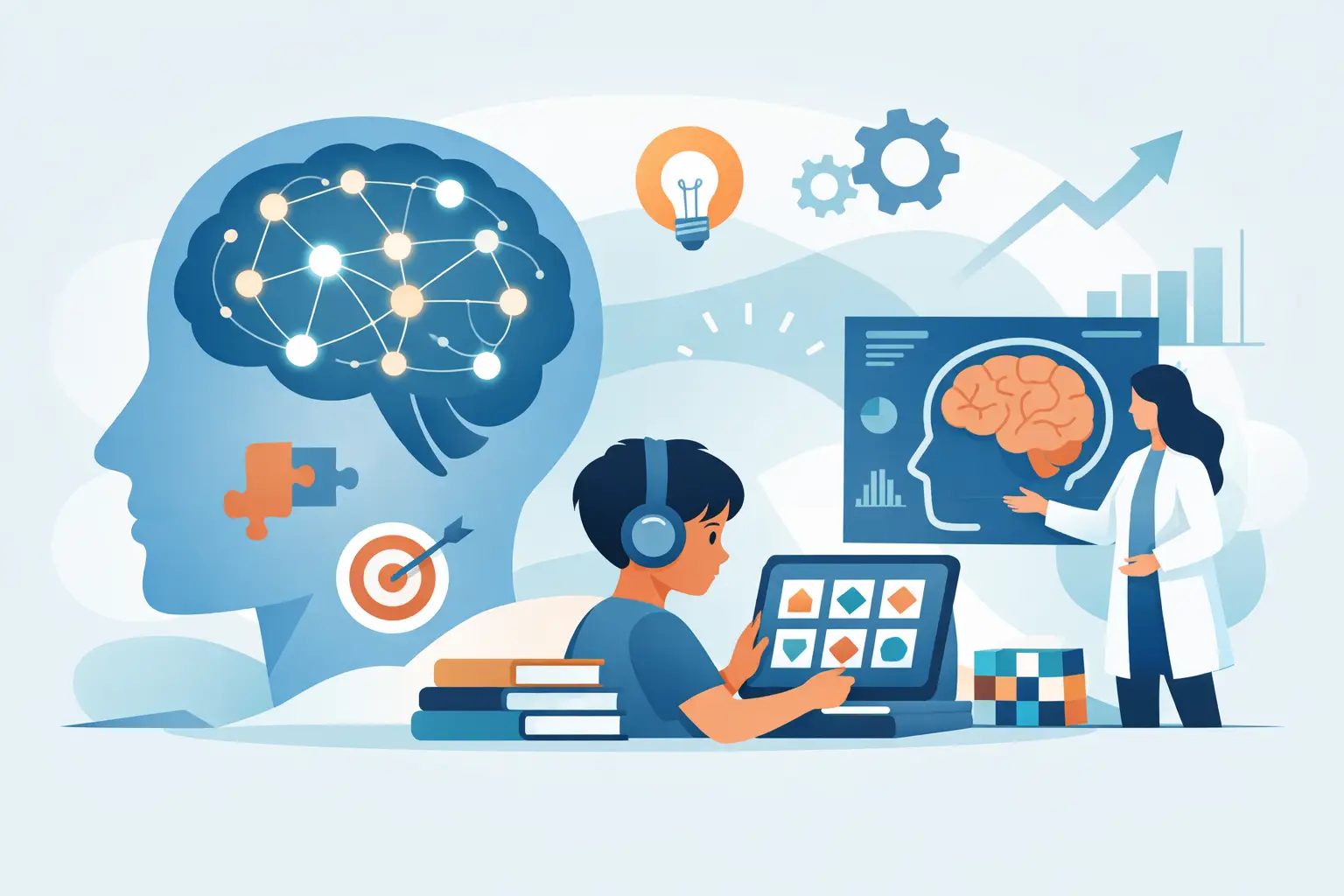
A child who can explain a story out loud but freezes when asked to read it on the page is not lazy. A student who studies for an hour and still misses simple instructions is not failing on purpose. For many families, the real question is whether learning disability brain training can improve attention, reading, and comprehension in a way that is safe, measurable, and realistic.
That question deserves a clear answer, not hype. Some programs are built around repetition and general mental exercises. Others use neuroscience-based methods designed to train the brain more directly. The difference matters, especially for children with dyslexia, ADHD, reading difficulties, or broader learning challenges. Parents are not just looking for activity. They are looking for progress they can see in schoolwork, daily routines, and confidence.
What learning disability brain training actually means
The term is often used too broadly. In practice, learning disability brain training can describe very different approaches. Some programs focus on memory games or processing-speed tasks. Some rely on paper-based drills. Others use digital training paired with neurofeedback, where the brain receives real-time feedback and learns to regulate attention and cognitive performance more effectively.
This distinction is important because not every type of brain training targets the same problem. A child with reading fluency difficulties may need support that improves attention stability, processing efficiency, and comprehension together. A child with ADHD-like symptoms may benefit most from training that helps the brain sustain focus and reduce inconsistency. The best approach depends on the child’s profile, age, symptoms, and baseline performance.
That is why serious families should be cautious with one-size-fits-all promises. Brain training is not magic. It is a method. Its value depends on whether the training is aligned with how the brain changes through neuroplasticity and whether progress is tracked with concrete measures.
Why some children respond and others do not
Parents often ask the same thing in different words: if the brain can change, why do results vary? The short answer is that brain-based learning challenges are not identical. Two children can both struggle with reading, but for different underlying reasons. One may have weak phonological processing. Another may be overwhelmed by poor sustained attention. A third may understand material well but cannot process it fast enough under classroom demands.
This is where many basic programs fall short. They train a broad skill and hope improvement transfers everywhere. Sometimes it does. Often it does not. Better results usually come from training systems that are structured, personalized, and repeated consistently over time.
There is also the issue of dosage. Families understandably want quick relief, especially when school pressure is building. But the brain changes through repeated practice. A child who uses a program irregularly is less likely to show meaningful gains than one who follows a guided schedule with professional oversight. Consistency is not a small detail. It is part of the treatment logic.
The science behind brain training for learning disabilities
Not every claim in this space is backed by evidence. That should be said plainly. Parents should expect more than testimonials. They should look for academic studies, clinical research language, measurable performance indicators, and a training model grounded in neuroplasticity.
Neuroplasticity refers to the brain’s ability to adapt through repeated experience. This is the foundation for many evidence-based interventions. When training is paired with real-time feedback, especially EEG-based neurofeedback, the brain is not simply practicing a task. It is learning to recognize and strengthen more effective patterns of activity.
For children with learning difficulties, this can matter because attention control is tightly connected to reading accuracy, reading speed, and comprehension. If a child cannot maintain stable focus, even strong instruction may not fully translate into performance. In those cases, training attention regulation may support better academic learning downstream.
Still, this is where nuance matters. Brain training should not be presented as a replacement for all educational support. Some children need reading instruction, speech-language support, school accommodations, or behavioral intervention alongside it. The strongest position is not either-or. It is matching the right tools to the child’s real needs.
Learning disability brain training and neurofeedback
Among the more promising options, EEG-based neurofeedback stands out because it provides direct feedback based on the child’s own brain signals. In simple terms, the system reads brain activity and uses visual or auditory cues to help the brain move toward more efficient patterns associated with focus and cognitive control.
For parents, the key advantage is that this approach is designed to be measurable. Instead of relying only on impressions such as “he seems calmer” or “she feels more motivated,” families can monitor changes in functional outcomes like attention span, reading speed, and reading comprehension. That does not mean every child improves at the same rate. It means progress can be tracked with more discipline.
A home-based system can also make a major difference in adherence. When training requires frequent travel, many families start strong and struggle to maintain the schedule. A structured program used at home, especially when supported by doctor and psychologist guidance, removes a practical barrier that often limits results. Convenience alone is not the benefit. Better consistency is.
This is one reason systems like Auto Train Brain have drawn attention from families looking for a more serious solution. The value is not just the technology itself. It is the combination of EEG-based training, guided use, expert support, and a measurable framework built around real academic performance.
What parents should look for before choosing a program
The safest way to evaluate learning disability brain training is to ask better questions. What exactly is being trained? How often should the child use it? How is progress measured? Is there clinical reasoning behind the protocol? Is the method safe and noninvasive? Are there professionals involved in monitoring the process?
Parents should also ask what success looks like. A trustworthy provider will not promise the same result for every child. Instead, they will discuss likely targets such as improved sustained attention, better reading efficiency, stronger comprehension, or reduced mental fatigue during school tasks. These are meaningful outcomes because they connect directly to daily life.
It also helps to be realistic about timing. Some children show early shifts in attention and task tolerance before reading gains become obvious. Others improve gradually over several months. If a program presents change as instant, that is a warning sign. Lasting cognitive improvement is usually progressive, not dramatic overnight.
When brain training makes the most sense
Brain training is often worth considering when a child is trying hard but still cannot convert effort into performance. You may see this when homework takes too long, reading remains slow despite practice, or attention falls apart in predictable patterns. It can also make sense when families want a non-drug, side-effect-free support option that fits into daily life.
This does not mean medication, tutoring, or school support are wrong. It means families may need a safer, more comprehensive path when symptoms affect both academic skill and the brain functions that support learning. In those cases, a neuroscience-based training program may serve as an important layer of support rather than a last resort.
The strongest candidates are usually children whose difficulties show up repeatedly across attention, reading, comprehension, and mental stamina. When these problems cluster together, training the brain’s regulation systems may help create better conditions for learning to stick.
The trade-off parents should understand
There is no serious intervention without commitment. High-quality learning disability brain training requires time, repetition, and follow-through. Families need a plan they can actually maintain. That is why home usability, professional guidance, and clear progress tracking matter so much.
The trade-off is simple. A more structured, science-based program usually asks for more consistency, but it also offers a better chance of measurable improvement. For families who are tired of trying disconnected solutions, that trade can be worth it.
The most helpful next step is not to chase the loudest claim. It is to choose a safe, evidence-informed method that respects how the brain learns, how children differ, and how progress should be measured. When a child’s attention becomes steadier, reading becomes less effortful, and comprehension starts to improve, parents do not need exaggerated promises. They need proof that change is possible and a system that helps make it happen.