


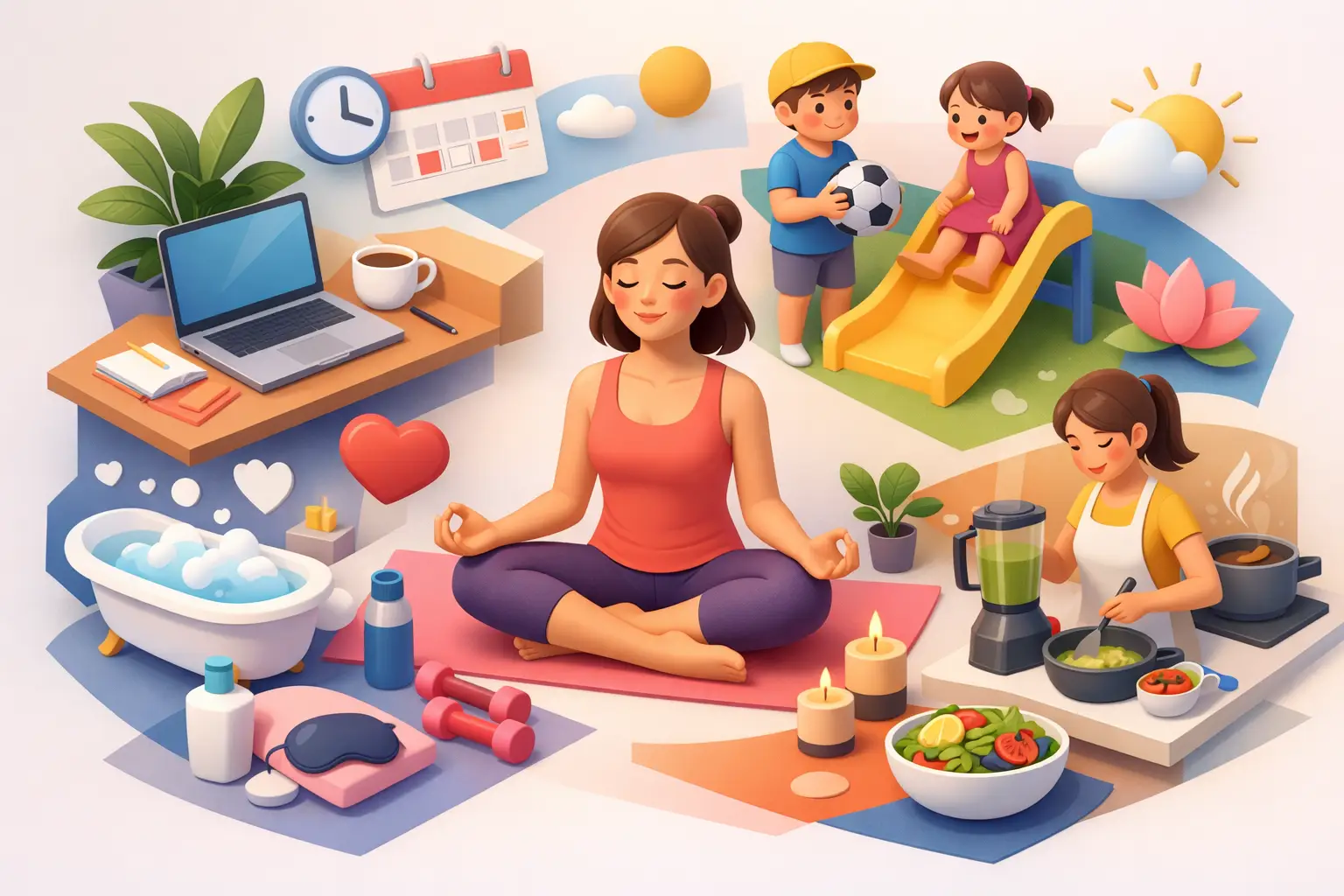
You can spot the problem fast. A mother spends all day managing school emails, meal logistics, appointments, emotional meltdowns, and the invisible planning that keeps a household moving – then gets told to “prioritize wellness” as if she has a free afternoon and a silent house. That gap between advice and real life is exactly why wellness feels vague, expensive, or out of reach for so many women.
Real wellness is not a luxury routine. It is the set of daily conditions that helps you think clearly, recover more steadily, and show up with a little more capacity than you had yesterday. For women carrying a child’s learning, attention, or developmental needs alongside work and family life, that definition matters. You do not need a perfect morning routine. You need support that fits the life you actually have.
Wellness is capacity, not image
A lot of wellness content is built around appearance, optimization, or aspiration. It sells the idea that if you buy the right supplements, track enough biomarkers, or wake up at 5 a.m., your life will finally feel organized. Sometimes those tools help. Often, they become one more thing to manage.
A more useful definition is simple: wellness is your ability to sustain physical energy, emotional steadiness, mental clarity, and recovery over time. That means wellness shows up in ordinary moments. You pause before reacting. You get through the afternoon without crashing. You sleep a little deeper. You feel less scattered during school pickup, less overloaded by noise, less depleted by the end of the week.
For many mothers, especially those already supporting a child with dyslexia, ADHD, or other neurodevelopmental differences, this shift is practical. You are not trying to become a different person. You are trying to create enough stability in your own system that caregiving does not consume all of your reserves.
Why wellness feels harder in real life
The usual advice fails because it ignores load. Stress is not only emotional. It is cognitive. It is the constant switching between roles, the background vigilance, the sleep disruption, and the decision fatigue that quietly wear down attention and resilience.
That is why two people can follow the same “healthy habits” and get very different outcomes. If your nervous system is already stretched, a new routine may feel supportive – or it may feel like another demand. It depends on timing, energy, and what season of life you are in.
There is also a deeper issue. Many women do not need more information. They need fewer inputs and better recovery. When your brain is overloaded, even good advice can create friction. Wellness works better when it removes pressure instead of adding performance goals.
The hidden cost of always being “fine”
High-functioning stress often gets missed because it looks productive from the outside. You answer messages, show up to meetings, remember everyone’s schedule, and keep the day moving. But internally, you may feel wired, forgetful, irritable, or mentally foggy.
This is where wellness should become more precise. Instead of asking, “Am I doing enough?” ask, “What is draining me most right now, and what restores me fastest?” That question is less glamorous, but far more useful.
What supportive wellness actually looks like
Supportive wellness is rarely dramatic. It is built from small practices that reduce strain and improve recovery. The right mix varies by person, but a few patterns matter for almost everyone.
Sleep is foundational, but not in a moralizing way. Better sleep does not fix everything, yet poor sleep makes everything harder – focus, emotional regulation, cravings, patience, memory. If you cannot overhaul your nights, improve the edges. Dim light earlier. Reduce stimulating input late at night. Keep one consistent wind-down cue your brain can recognize.
Nourishment matters for the same reason. Not because every meal needs to be ideal, but because unstable energy often feels like stress. Skipping meals, relying on caffeine to push through, and crashing later can make the day feel emotionally heavier than it already is.
Movement helps too, but it does not have to mean intense exercise. For a depleted nervous system, a walk after lunch, gentle mobility work, or ten minutes of quiet stretching may do more than a punishing workout you cannot sustain. Wellness should increase capacity, not prove discipline.
Wellness and the nervous system connection
One reason modern wellness advice feels fragmented is that it often treats the body and brain like separate projects. They are not. Attention, mood, sleep, sensory load, and stress recovery are tightly connected.
If your system spends most of the day in alert mode, you may not need more motivation. You may need more regulation. That can come from simple practices such as breathing with a longer exhale, stepping outside without your phone, reducing unnecessary noise, or building short transitions between tasks instead of rushing from one demand to the next.
For some adults, especially those interested in science-backed tools, wellness also includes structured brain-training practices that may support focus, regulation, and mental stamina as part of a broader routine. The key is to see these tools as support, not magic. They work best when they fit into a realistic rhythm that also includes sleep, nourishment, movement, and recovery.
A better wellness standard for mothers
If you are caring for others, your standard cannot be based on abundance of time. It has to be based on repeatability. The best wellness routine is the one that still works during a hard week.
That may mean your version of wellness is modest on paper. A protein-forward breakfast. Five minutes of quiet before the house wakes up. Less doom-scrolling at night. A short walk between work and pickup. One practice that helps you reset after sensory overload. None of this looks impressive online. It can still change the quality of a day.
There is a trade-off here. Big resets can feel motivating, but they often collapse under real-life pressure. Smaller practices feel almost too simple, yet they tend to last. In most households, consistency beats intensity.
When wellness becomes one more burden
There is a point where wellness content stops being helpful and starts becoming another standard to fail. If every choice feels loaded, your plan is too complicated.
A good rule is this: if a practice creates more stress than support, change it. Maybe meal prep is useful for one person and exhausting for another. Maybe tracking data creates clarity, or maybe it increases anxiety. It depends on your temperament and your current load.
This is especially relevant for women drawn to self-quantification. Data can be powerful when it gives you insight. It can be counterproductive when it pulls you away from your own signals. Wellness should help you notice patterns, not make you feel policed by them.
How to build wellness that fits your real week
Start with friction, not ambition. Look at the part of your day that breaks down most often. Is it late afternoon energy, bedtime overstimulation, poor sleep, constant snacking, or mental fog during work hours? Begin there.
Then choose one practice that is small enough to repeat without debate. Keep it visible and specific. “Take better care of myself” is too vague. “Eat before my second coffee” is concrete. “Put my phone away 30 minutes before bed” is concrete. “Step outside for five minutes after drop-off” is concrete.
Give it two weeks before you judge it. A lot of people quit useful habits because they expect a dramatic shift too quickly. In wellness, subtle improvements matter. More patience counts. Fewer energy crashes count. Better transitions count.
If you want more structure, stack your support in layers. Start with sleep and food, then movement, then regulation tools, then higher-level performance supports. Most people try to do this backward. They look for advanced solutions while their foundation is unstable.
Wellness should feel supportive, not performative
For many women, the most healing change is letting go of the idea that wellness has to look impressive. It does not need expensive aesthetics, perfect discipline, or a fully optimized calendar. It needs to help you live your life with more steadiness and less strain.
That is a more grounded goal, especially for mothers carrying visible and invisible labor every day. If a science-backed wellness practice helps you feel more focused, more regulated, or more able to recover, it has value. If a simple daily shift gives you a little more room to breathe, that counts too.
Not a medical device – does not replace physician advice. Individual results may vary.
The best wellness plan is often the one that quietly makes tomorrow feel more manageable than today.