


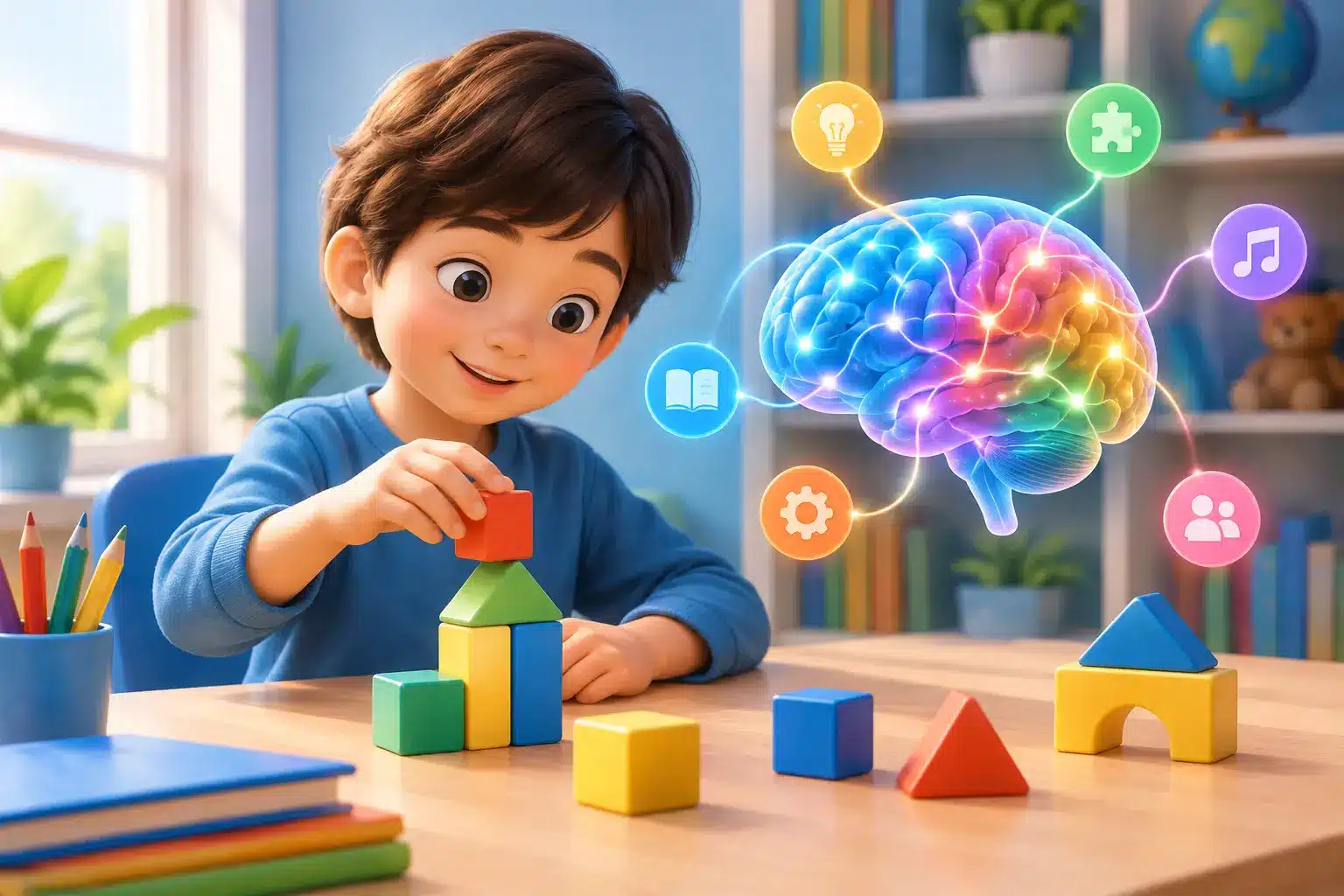
A child who avoids reading aloud, loses track of multi-step directions, or gives up after one hard math problem is not showing a fixed limit. Their brain is responding to a challenge, a history of experiences, and the feedback it receives along the way. Brain plasticity is the reason practice, environment, encouragement, and well-chosen learning supports can matter so much over time.
For parents raising children with dyslexia, ADHD-related attention differences, learning challenges, or other neurodevelopmental differences, this idea can bring hope without asking anyone to pretend progress is instant. A child’s brain can change through experience, but meaningful growth usually comes from steady repetition, realistic expectations, and support that fits the child.
What Is Brain Plasticity?
Brain plasticity, also called neuroplasticity, describes the brain’s ability to adapt in response to experience. When children learn a new skill, repeat an action, solve a problem in a new way, or receive feedback, their brains strengthen and refine the pathways involved in that task.
This does not mean a child can simply “try harder” and suddenly find reading easy. It means the brain is not static. Skills such as sustaining attention, decoding words, organizing work, managing frustration, and following routines can develop through repeated, meaningful experiences.
Children’s brains are especially responsive to learning because they are still developing rapidly. Yet plasticity is not limited to early childhood. Teenagers continue building skills, adapting strategies, and developing greater self-awareness. The key is not rushing the process. It is creating conditions in which practice can happen often enough, with enough support, for learning to become more familiar.
Why Brain Plasticity Matters for Learning Differences
Many parents have heard discouraging labels at school or have watched their child work twice as hard for results that seem to come slowly. Brain plasticity offers a more useful lens: instead of asking, “Why can’t my child do this yet?” families can ask, “What experiences and supports could help this skill become more accessible?”
That shift matters because children who struggle academically often begin to associate learning with embarrassment, pressure, or failure. When every worksheet becomes a battle, the child may avoid the very practice that could help them build confidence. A supportive approach protects motivation while still making room for challenge.
For example, a child who finds long reading assignments overwhelming may benefit from shorter, consistent reading periods with material that matches their interests. A child who misses verbal instructions may do better when instructions are broken into one or two visible steps. These changes are not shortcuts. They are ways of making practice possible.
Progress also rarely moves in a straight line. A child may show better focus one week and struggle the next because of sleep changes, school demands, social stress, or a difficult assignment. Looking at patterns over weeks and months is more informative than judging growth by one afternoon.
The Conditions That Help the Brain Practice New Skills
Brain plasticity responds to experience, but not every experience has the same effect. Repetition matters, yet mindless repetition can lead to frustration. The most helpful practice is frequent enough to build familiarity, challenging enough to require attention, and manageable enough that a child can stay engaged.
Practice Should Be Specific
“Work harder” is too broad for a child who is already frustrated. A clearer target might be reading five pages with a parent nearby, using a checklist to pack a school bag, or practicing a three-step routine before homework begins.
Specific practice gives children a visible finish line. It also helps parents recognize improvement that might otherwise be missed. If the goal is “better focus,” progress can feel vague. If the goal is “stay with one task for eight minutes before taking a planned break,” everyone knows what they are working toward.
Feedback Should Be Timely and Calm
The brain learns from feedback, especially when it arrives close to the action. That does not require constant correction. In many cases, a brief observation works better: “You noticed the first sentence was confusing and read it again. That was a strong strategy.”
Praise is most useful when it reflects effort, strategy, and persistence rather than only outcomes. Telling a child they are “so smart” may feel encouraging, but it can make mistakes feel threatening. Noticing the process teaches a more durable message: skills grow through practice.
Rest Is Part of Learning
A tired, overloaded child may not be able to show what they know. Sleep, movement, regular meals, quiet time, and predictable routines support the conditions for attention and learning. These habits do not remove every challenge, but they can reduce unnecessary friction in the day.
Parents do not need to build a perfect household schedule. A consistent bedtime window, a short outdoor break after school, and a calmer homework start can be meaningful places to begin.
Practical Ways to Support Brain Plasticity at Home
The goal is not to turn home into a second classroom. Children need downtime, play, and room to be themselves. Still, small daily practices can create valuable learning opportunities without making every moment feel like a lesson.
Start by choosing one skill that would make daily life easier for your child. It might be getting started on homework, remembering morning steps, reading with less avoidance, or recovering after disappointment. Focus on that skill for several weeks before adding more demands.
Create a simple routine around it. If homework initiation is the target, the routine could be: have a snack, set out materials, choose the first task, work for a short planned block, then take a break. Visual reminders can reduce the number of verbal prompts a parent has to repeat.
Use interests as an entry point. A child who loves animals may be more willing to read animal facts than a generic passage. A child interested in building may engage more readily with planning, measuring, and problem-solving through a hands-on project. Interest does not replace skill-building, but it can lower resistance and increase time on task.
Finally, make room for the child’s own observations. Ask, “What made that easier today?” or “What would you change next time?” These questions help children notice their strategies instead of seeing adults as the only people who can solve a problem.
Where Neurofeedback Fits Into a Learning Routine
Neurofeedback is a brain-training wellness practice that uses real-time feedback to help a person observe and practice self-regulation. For some families, it may be one part of a broader routine that includes school collaboration, learning supports, healthy daily habits, and skill practice at home.
It is best approached with clear expectations. Neurofeedback is not a replacement for educational planning, patient teaching, or the relationships that help a child feel understood. Families may find it useful to keep notes on everyday observations, such as homework stamina, willingness to begin tasks, or ability to return to an activity after distraction. That gives progress a real-world context.
At Auto Train Brain, the focus is on a structured, EEG-based neurofeedback and brain-training wellness experience designed to help families observe practice over time. The most meaningful questions are practical: Is the child more willing to engage? Are routines becoming less stressful? Is the family noticing small changes that can be reinforced?
Measure Progress Without Making Your Child Feel Measured
Tracking can be helpful when it reduces guesswork, not when it creates pressure. Parents can choose two or three observations to revisit weekly, such as how long homework takes to start, how many reminders a morning routine needs, or whether the child returns to a task after a break.
Keep the record short. A few notes on a phone or calendar are enough. The purpose is to notice trends and celebrate meaningful effort, not to turn childhood into a performance report.
It also helps to share progress carefully. Rather than saying, “You used to be terrible at this,” try, “A month ago, starting this assignment took a lot of support. Today, you opened your notebook and chose your first step.” That language honors growth without attaching shame to the starting point.
Brain plasticity is a hopeful concept because it leaves room for change. It also asks for patience. Children build skills at different rates, and the best support is rarely the loudest or fastest option. Individual results may vary. What often matters most is a steady message: challenges are real, support is available, and your child can keep practicing toward greater confidence.