


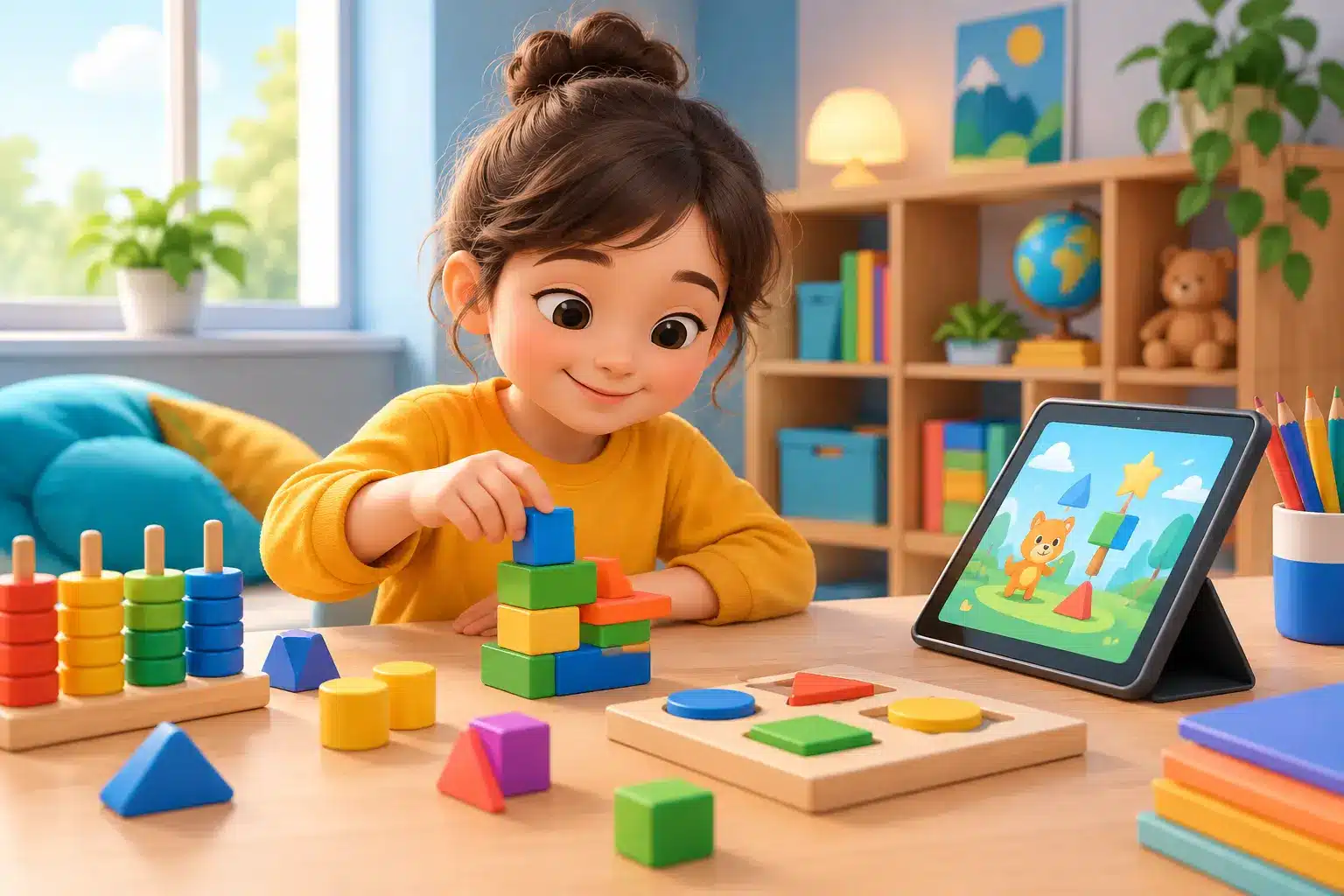
A child who avoids a worksheet may spend 20 focused minutes solving a game challenge. That difference is not a trick or a shortcut. It is a clue: when practice feels purposeful, achievable, and interesting, children are often more willing to stay with it. Eğitici oyunlar – educational games – can give families a practical way to support attention, reading, planning, and confidence without turning every afternoon into another school session.
For parents of children with ADHD, dyslexia, learning differences, or other neurodevelopmental differences, the goal is rarely to make a child work harder. The more useful goal is to create conditions where they can engage, notice progress, and return tomorrow without dread.
Why Eğitici Oyunlar Work Differently Than Worksheets
A well-designed educational game gives a child immediate information about what happened after a choice. They try a strategy, see a result, adjust, and try again. This short feedback loop can make abstract skills feel concrete.
For example, a word-building game may invite a child to experiment with sounds and letter patterns. A memory challenge may ask them to hold information in mind while ignoring distractions. A planning game may require them to pause, predict consequences, and sequence steps. The learning target matters, but so does the experience of practicing it repeatedly in a low-pressure format.
This is especially relevant when a child has begun to associate academic work with correction, comparison, or frustration. Games should not disguise demands or pressure a child to perform. Their value comes from offering a different doorway into practice: one with choice, curiosity, and manageable challenge.
That said, not every game labeled “educational” is a good fit. Fast rewards, constant sound effects, and endless tapping can hold attention without building a meaningful skill. The best choice depends on what your child needs to practice, how they respond to stimulation, and whether the game encourages thinking rather than simply reacting.
Choose the Skill Before You Choose the Game
Start with one observable goal. “I want my child to focus better” is understandable, but it is broad. A clearer goal might be: staying with a task for five more minutes, remembering two-step directions, recognizing sound patterns in words, or taking turns without quitting after a mistake.
Once the goal is specific, you can look for games with the right type of demand.
For attention and impulse control
Look for turn-based games, visual search activities, matching tasks, and games that reward waiting for the right moment rather than tapping quickly. A child who struggles with impulsive responses may benefit more from a game that invites a brief pause than from one built around speed.
Keep the rounds short at first. Ending after a successful five-minute round can be more motivating than continuing until fatigue creates conflict. Over time, the child can help choose whether to add another round.
For reading and language practice
Word families, rhyming, syllable games, storytelling prompts, and letter-sound matching can support foundational literacy habits. For children who find reading effortful, choose games where the text is visually clear and the demand is adjustable. Large print, limited instructions, and time to think can make a major difference.
Avoid assuming that harder is always better. If a game produces repeated guessing or shutdown, lower the level, simplify the rule, or play cooperatively. Confidence is not separate from learning. It affects whether a child is willing to keep practicing.
For working memory and organization
Sequence games, simple strategy games, pattern copying, and activities that involve following steps can be useful options. These games can help a child practice holding information in mind while making a decision.
The key is to watch the load. A game requiring memory, speed, reading, and social negotiation all at once may be stimulating for one child and overwhelming for another. Reduce one demand before deciding the game is not a fit.
For emotional flexibility
Some of the most valuable learning happens when a child loses a turn, changes a plan, or sees that a mistake can be repaired. Cooperative games are particularly helpful here because everyone works toward a shared outcome. They can shift the family conversation from “Who won?” to “What should we try next?”
The Screen-Time Question: Quality Still Needs Boundaries
Digital games can be engaging and adaptable, but a screen does not automatically make an activity educational. A useful digital game asks the child to make decisions, recognize patterns, recall information, or create something. Passive watching, repetitive tapping, and reward loops may feel busy without offering much practice.
Offline games have advantages too. Cards, dice, blocks, puzzles, and movement-based activities support face-to-face interaction and make it easier for adults to notice how a child approaches a challenge. They also create natural opportunities for language: “What is your plan?” “What did you notice?” “Want to try a different way?”
Many families do best with a mix. A short digital activity may work well for independent practice, while an offline game can become a predictable family ritual. The right balance depends on your child’s age, sensory preferences, daily schedule, and response after playing. If they are more dysregulated, irritable, or unable to transition afterward, the format or duration may need adjustment.
How to Make Educational Games Part of Real Life
The biggest mistake is treating games as another item on an already crowded to-do list. Educational play works best when it is small enough to repeat. Ten calm minutes, three times a week, is often more sustainable than one ambitious session that everyone dreads.
Create a simple routine: offer a choice between two games, set a clear stopping point, and end with one specific observation. Instead of saying, “You did great,” try, “You slowed down and checked the pattern before you answered,” or “You stayed with that hard word even when it was frustrating.” Specific feedback helps children connect effort to a strategy they can use again.
Let your child have some control. They can choose the color of the pieces, the order of activities, whether to play together or independently, or the level of challenge. Choice does not mean giving up structure. It means making room for ownership inside a clear boundary.
Also, resist turning every game into a lesson. If your child is enjoying a board game, you do not need to quiz them on every move. One thoughtful prompt is enough. The goal is for the experience to remain play, not become a disguised evaluation.
What Progress Can Look Like
Progress is not always a dramatic leap. It may show up as a child asking to play again, recovering faster after a mistake, reading one instruction independently, or using a strategy without being reminded. These small moments are meaningful because they can signal growing comfort with challenge.
A simple family note can help you spot patterns over several weeks. Record the game played, the length of engagement, what felt easy or hard, and one observation about mood or strategy. This is not about scoring your child. It is about making decisions based on what you actually see rather than on one difficult afternoon.
If a game repeatedly triggers tears, arguments, or avoidance, pause it. That does not mean your child has failed, and it does not mean you chose poorly. It may simply mean the challenge, timing, or format needs to change. A good educational routine adapts to the child in front of you.
When Brain-Training Wellness Practice Fits In
Games can support everyday practice, but they are one part of a broader learning environment that includes rest, movement, school support, family connection, and routines. Some families also explore neurofeedback or brain-training wellness practices as a way to support attention and self-awareness through structured feedback.
Auto Train Brain approaches this space through measurable, technology-supported practice designed for families who want to understand their child’s engagement over time. An expert conversation can help you consider whether a structured wellness routine belongs alongside the games and educational supports you already use.
Not a medical device – does not replace physician advice.
Individual results may vary.
The most helpful game is not the one with the most features or the highest difficulty level. It is the one your child can return to with a little more willingness, a little more agency, and a growing belief that hard things can become more manageable with practice.