


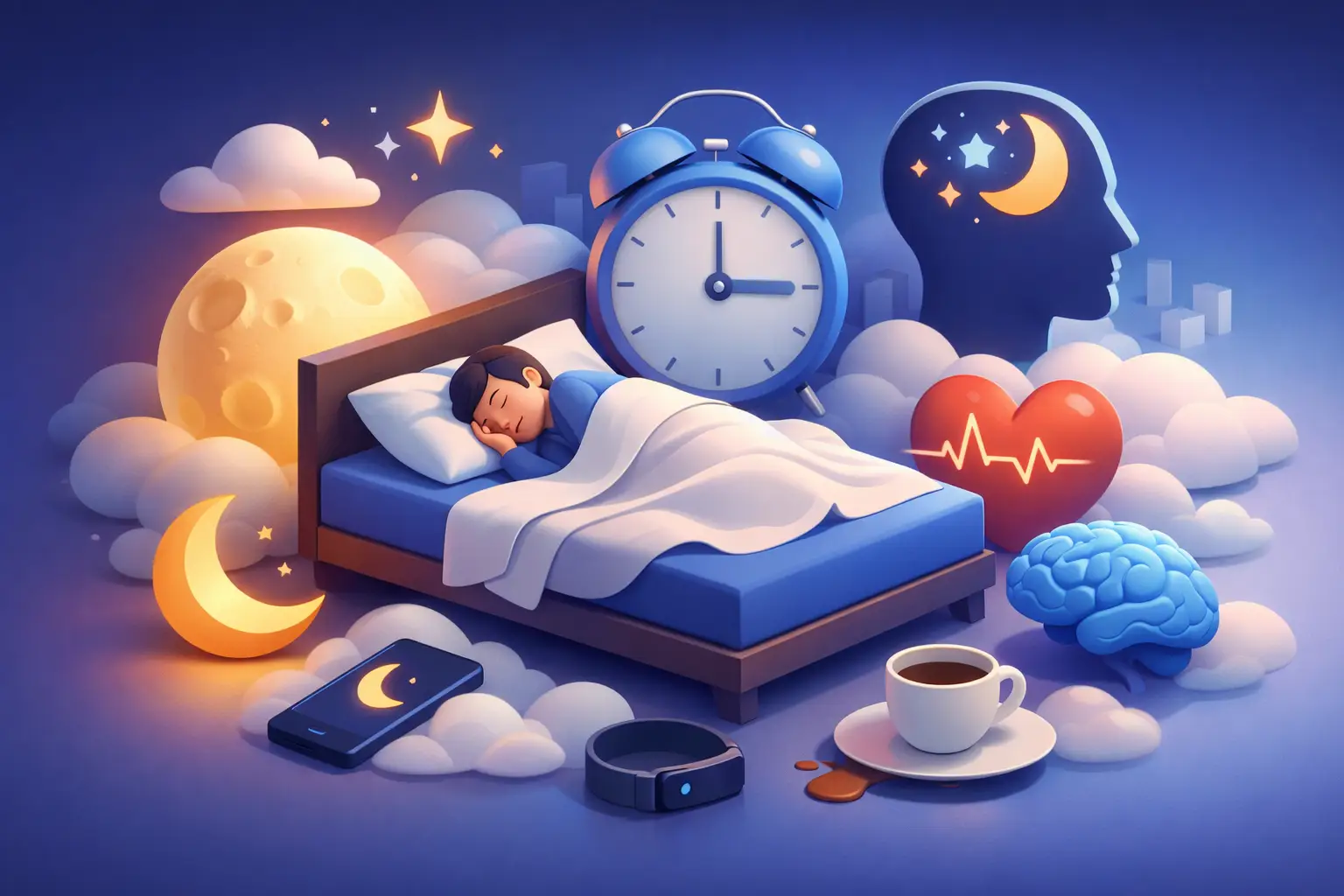
Some parents can spot a rough day before breakfast. Their child is more reactive, less flexible, harder to redirect, and somehow already tired by 8:15 a.m. Adults know the feeling too – when one poor night turns simple tasks into uphill work. Sleep often sits in the background of these moments, but it shapes far more than energy. It can influence attention, emotional regulation, learning, memory, and how the brain handles stress.
For families raising children with attention or learning challenges, and for adults carrying a constant mental load, sleep is rarely just about being rested. It is part of the foundation. When that foundation is shaky, everything else can feel harder.
What sleep is really doing for the brain
During sleep, the brain is not simply shutting off. It is actively sorting, organizing, restoring, and recalibrating. New information gets processed. Emotional experiences are integrated. The brain moves through repeating cycles, including lighter sleep, deeper sleep, and REM sleep, and each stage appears to support a different part of cognitive and emotional function.
That matters in everyday life. A child who is working hard on reading, focus, impulse control, or transitions is also relying on the brain systems that benefit from consistent sleep. An adult trying to juggle work, caregiving, symptoms, appointments, and decision fatigue is doing the same. Sleep does not solve every challenge, but it may support the brain’s ability to respond with more stability.
This is where nuance matters. One short night does not automatically create a major problem, and one perfect night does not fix chronic overload. What tends to matter most is the pattern. Irregular bedtimes, too much late-evening stimulation, frequent night waking, or long-term sleep debt can slowly affect daily performance in ways that families may mistake for motivation, behavior, or personality.
Sleep and attention are closely connected
When parents say, “My child just can’t focus,” sleep is not always the reason, but it is one of the first places worth looking. Tired brains often have more difficulty sustaining attention, filtering distractions, and shifting smoothly between tasks. That can show up as zoning out, irritability, impulsive behavior, or big reactions to small demands.
Adults are not different. Poor sleep can make concentration feel fragile. You may reread the same sentence three times, forget why you entered a room, or feel overstimulated by ordinary noise. In high-stress seasons, that can create a loop – less sleep leads to less regulation, which leads to more stress, which then makes sleep harder.
For children with neurodevelopmental differences, this relationship can feel even more visible. A sleep-deprived child may seem less available for learning, less patient with frustration, and less able to recover from routine challenges. That does not mean every difficult day comes back to bedtime. It means sleep deserves attention because it may support the conditions under which progress becomes easier.
Why sleep affects learning and memory
Parents often focus on what happens during school hours, tutoring, or skill practice. That makes sense. But part of learning happens after the work is done. Sleep appears to help the brain consolidate information, which means it strengthens and organizes what was practiced during the day.
Think about a child sounding out words, learning spelling patterns, or working on math facts. Practice matters, but so does the brain’s ability to process that practice afterward. The same goes for adults learning new routines, absorbing information, or trying to build more consistent habits. Better sleep may support retention, recall, and mental flexibility.
This is one reason late-night cramming often disappoints. More waking hours do not always mean more effective learning. Sometimes the most productive thing for the brain is enough rest to process what it just took in.
The emotional side of sleep
Families usually notice the emotional effects of poor sleep before anything else. A child cries faster, argues more, or has less tolerance for changes in plan. An adult feels more reactive, more anxious, or emotionally thin-skinned. That does not mean sleep is the whole story. Stress, sensory load, hormones, routines, and environment all matter too. But sleep can lower the brain’s resilience when those stressors show up.
This is especially relevant in homes where mornings are rushed and evenings are packed. If every day already asks a lot from a child or parent, inconsistent sleep can remove some of the buffer that helps everyone cope. Better sleep will not make family life perfectly smooth, but it may make hard moments more manageable.
What gets in the way of better sleep
The answer is rarely laziness or lack of discipline. More often, sleep problems build from a mix of practical and biological factors. Some children become more alert at night instead of winding down. Some adults are so tired they fall asleep easily but wake at 3 a.m. with a racing mind. Screens, light exposure, caffeine timing, inconsistent schedules, stress, sensory sensitivity, and bedtime power struggles can all play a role.
Parents of ND children often face another layer – the same child who needs structure may resist transitions, need more time to settle, or become dysregulated by the pressure of bedtime itself. In those cases, forcing a picture-perfect routine can backfire. What helps one child may overstimulate another.
That is why the best sleep support is usually realistic, not idealized. A routine only works if the family can actually repeat it.
How to support healthier sleep without overcomplicating it
The strongest starting point is consistency. A predictable bedtime and wake time helps the brain recognize when to wind down and when to rise. This does not require perfection, especially on weekends, but large swings can make the next few nights harder.
Light matters too. Morning light helps anchor the body’s internal clock, while bright light at night can delay sleepiness. For many families, getting outside earlier in the day helps more than another bedtime hack.
The hour before bed often needs less stimulation, not more. That might mean dimmer lights, fewer fast-paced screens, quieter activities, and a simpler sequence the brain learns to expect. Bath, pajamas, reading, lights out is more effective than a constantly changing routine designed from internet advice.
For children, sensory preferences matter. Some settle better with white noise, a heavier blanket, or a cool dark room. Others need movement earlier in the evening and very little input right before bed. For adults, the same principle applies – if your nervous system is still activated, the body may be in bed while the brain is still on shift.
It also helps to look honestly at daytime patterns. Too little movement, late caffeine, irregular meals, long afternoon naps, or constant stress can all echo into the night. Sleep is not isolated. It is connected to the full rhythm of the day.
When sleep issues keep lingering
If sleep struggles are frequent, intense, or affecting daily functioning, it may help to step back and look at the broader picture. Sometimes bedtime is the visible problem, but the real issue is stress load, sensory dysregulation, inconsistent routines, or a nervous system that has trouble shifting states.
This is where a science-backed brain-training wellness practice may become part of a larger support plan. Families exploring neurofeedback often do so because they want to better understand patterns in attention, regulation, and resilience. Sleep can be part of that conversation, not as a stand-alone fix, but as one piece of how the brain performs under daily demands.
At ATB, we view these patterns through the lens of neuroplasticity and measurable progress, while staying grounded in what families can realistically sustain. Not a medical device – does not replace physician advice. Individual results may vary.
Better sleep is rarely dramatic at first
Most people expect a big turning point. More often, change starts quietly. Mornings become slightly less chaotic. Homework takes a little less effort. Reactions soften. You feel more like yourself, or your child seems more available for the day.
That is worth paying attention to. Sleep is not a minor habit sitting off to the side of learning and regulation. It is part of the environment the brain depends on. And when that environment improves, even modestly, daily life often feels less heavy.
If sleep has been treated like an afterthought in your home, that is not failure. It is common. Start with one pattern, make it gentler and more consistent, and give the brain a better chance to do what it already knows how to do.