



How to Build Your Child’s Focus at Home

Learn how to support your child’s focus with realistic routines, movement, calmer study spaces, and brain-training habits built for everyday family life.

Learn how to support your child’s focus with realistic routines, movement, calmer study spaces, and brain-training habits built for everyday family life.
Some evenings you need to be heard without managing anyone’s reaction. Where an AI companion fits in real life — and what it can’t replace.
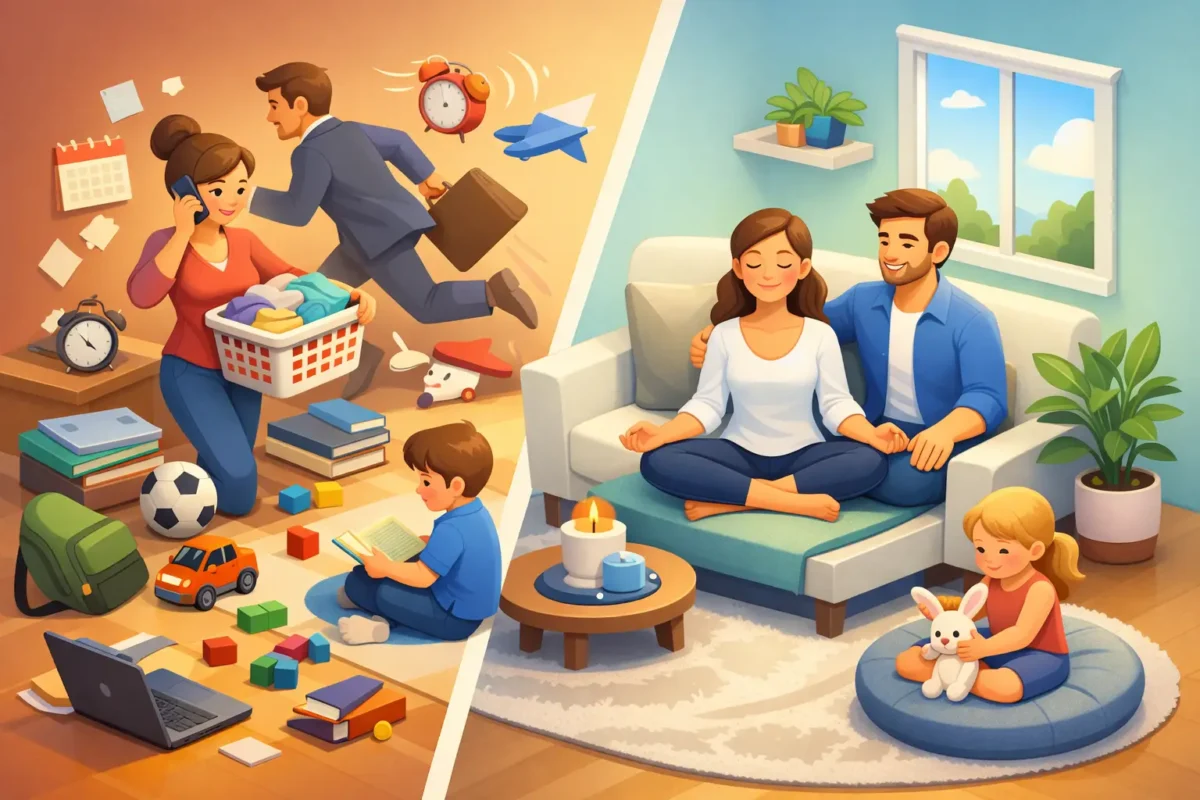
Calm is not a personality trait. Learn how parents can build steadier routines, co-regulation, and brain-friendly pauses during demanding family days.
Staying up late when exhausted is not a discipline failure — it is a hunger for time that belongs to you. Kinder ways to reclaim it.

Learning and creativity grow when children have room to focus, explore, make mistakes, and build routines that honor how their brains learn best at home.
‘Just ask for help’ skips the hardest part: the invisible work of delegating. Naming the load is what finally makes asking possible.

Fatigue can affect focus, patience, and family routines. Learn practical ways to notice patterns, reset your day, and build restorative habits at home.
By late afternoon even small choices feel heavy. A kind look at decision fatigue at home and how to lighten the load on a depleted brain.

Attention deficit can affect school, routines, and confidence. Learn supportive ways to build focus skills at home and school, one step at a time.
The fastest calming tool you carry is a longer exhale. What research on sighing shows, and how to use it in the middle of a hard moment.