




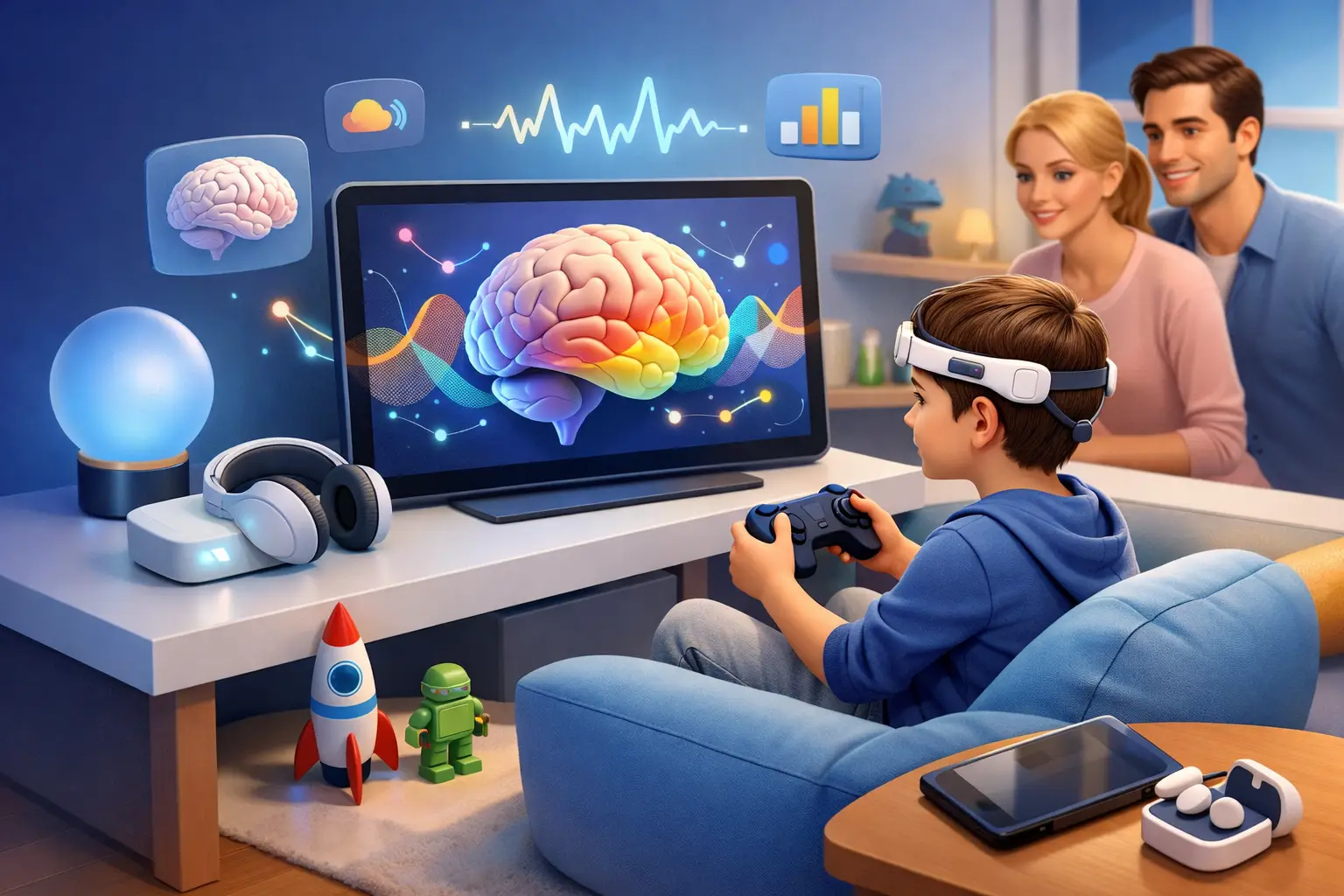
When a child struggles to focus, keep up with reading, or stay regulated through the school day, families usually feel the pressure long before anyone else does. A home neurofeedback system for kids often enters the conversation at that point – not as a trend, but as a practical option for parents who want something measurable, safe, and manageable inside real daily life.
For many families, the question is not whether attention and learning challenges are affecting confidence. It is whether there is a structured way to support the brain skills behind those challenges without adding more stress. That is where neurofeedback can make sense, especially when it is built around guided use, objective tracking, and a system children can actually use at home.
What a home neurofeedback system for kids actually does
Neurofeedback is a brain-training method based on real-time feedback. In simple terms, an EEG headset reads patterns in brain activity, and software turns those signals into immediate visual or audio cues. When the brain produces more helpful patterns related to focus, regulation, or sustained attention, the child receives feedback in the moment.
This matters because the brain learns through repetition. A well-designed neurofeedback process does not ask a child to “try harder” or sit through another lecture about paying attention. It gives the brain direct information about its own activity and uses that feedback to support change over time through neuroplasticity.
For parents, the strongest appeal is often that this process is non-invasive, safe, and free from medication-related side effects. That does not mean every child responds the same way, and it does not mean results happen overnight. It means the approach can fit into a broader developmental support plan in a way that is structured and observable.
Which kids may benefit most
A home neurofeedback system for kids is usually considered when a child shows ongoing difficulties in areas such as attention, reading fluency, working memory, impulse control, or emotional regulation. Families of children with ADHD-related attention challenges, dyslexia, learning differences, autism-related regulation needs, or general cognitive performance concerns often explore this option.
The key point is that neurofeedback is not just about behavior on the surface. It is about supporting the underlying patterns that affect school readiness, consistency, and self-confidence. A child who melts down over homework, loses focus halfway through instructions, or tires quickly during reading may not need more pressure. That child may need better support for attention control and cognitive endurance.
Age also matters. Younger children may do best with shorter, more engaging sessions and highly visual feedback. Older children and teens may tolerate longer sessions and can often participate more actively in progress discussions. The best systems adapt to developmental level instead of expecting every child to fit the same routine.
What parents should expect at home
The biggest advantage of home use is consistency. Families do not have to build their week around repeated travel, waiting rooms, and missed school hours. When a system is designed well, sessions become part of the home routine, which makes long-term follow-through much more realistic.
That said, convenience should not be confused with casual use. Good outcomes usually depend on frequency, proper setup, and expert guidance. If the headset placement is inconsistent, if sessions are skipped frequently, or if there is no meaningful review of progress, the experience can become frustrating.
Parents should expect a learning curve at the beginning. There is usually a period of getting comfortable with the equipment, understanding session timing, and observing how the child responds. Some children enjoy the process right away because the feedback feels game-like. Others need a little time, especially if they are sensitive to new routines or become discouraged easily.
The most effective home systems reduce this friction. They make setup simple, present feedback in a child-friendly way, and pair the technology with professional oversight so families are not left guessing what is normal or whether progress is on track.
How to evaluate a home neurofeedback system for kids
This is where many parents need clarity. Not every product that mentions focus or brain training offers meaningful neurofeedback. If you are comparing options, look first at whether the system uses EEG-based measurement rather than generic relaxation content or passive media.
Next, pay attention to how progress is monitored. A strong system should not rely only on vague impressions like “it seems better.” Parents need a clear framework for tracking change in attention, reading stamina, behavioral regulation, session completion, and other functional outcomes that matter at home and school.
Scientific grounding also matters. Families should feel comfortable asking whether the approach is informed by academic studies and clinical research, whether the process is designed around safety, and whether children receive individualized support rather than a one-size-fits-all protocol.
Finally, ask what kind of human guidance is included. Home use does not mean families should be alone. Systems that combine software, EEG hardware, and expert check-ins tend to be more reassuring for parents and more sustainable for children. That blend of technology and guidance is often what turns interest into real follow-through.
What results are realistic
Parents deserve honest expectations. A home neurofeedback system for kids is not a magic switch, and any claim that promises identical results for every child should raise concern. Progress is usually gradual and depends on the child’s profile, consistency of use, starting difficulty level, and whether neurofeedback is part of a larger support plan.
Some families notice early changes in session tolerance, calmness, or ability to stay with a task. Others see the more meaningful changes later – fewer homework battles, better reading persistence, smoother morning routines, or improved classroom readiness. Often, the most valuable gains are functional. A child may not suddenly become perfect at focusing, but they may recover faster, sustain effort longer, and feel less defeated by daily demands.
That difference is not small. When a child starts experiencing success more consistently, confidence often improves alongside performance. For many families, that is the turning point they have been hoping for.
Why measurement matters as much as motivation
Parents are often told to be patient, but patience is easier when progress is visible. That is why measurable data matters. Subjective feedback from parents and teachers is useful, but objective indicators help families stay grounded.
A system that tracks session patterns, response consistency, and attention-related performance can make the process more transparent. This is especially helpful for families who have already tried multiple supports and are understandably cautious. Evidence builds trust, and trust supports consistency.
This is also where integrated neurotechnology can offer more value than a standalone device. When EEG-based training is supported by cognitive monitoring and expert interpretation, parents get a clearer picture of what is changing and what still needs support.
Common concerns parents have
One common concern is whether the child will actually use it. That depends a lot on design. If the experience feels overly technical or repetitive, children may resist. If it is engaging, age-appropriate, and short enough to fit daily life, adherence tends to improve.
Another concern is safety. Parents are right to ask this. Neurofeedback is widely valued because it is non-invasive and does not introduce medication-related side effects. Still, safety also comes from proper use, appropriate protocols, and professional oversight. Those details matter.
Parents also worry about whether home use is “serious enough” compared with in-person support. The answer is that home-based use can be highly effective when the system is evidence-based and the process is guided. In many cases, home access improves consistency, and consistency is one of the strongest predictors of meaningful change.
A smarter way to support focus and learning at home
Families do not need more vague promises. They need a clear path that respects both the science and the realities of family life. That is why a well-built home neurofeedback system for kids stands out. It brings together brain-based training, measurable progress, and practical use in the place where habits are formed every day.
For children who need support with attention, learning, regulation, or cognitive performance, home neurofeedback can be more than convenient. It can be the structure that finally makes support consistent. And for parents, that consistency often brings something just as valuable as progress – relief.
If you are considering the next step, focus on safety, evidence, guidance, and measurable outcomes. The right system should help your child build stronger skills while making your daily routine feel more manageable, not more complicated. That is the standard worth holding onto.