




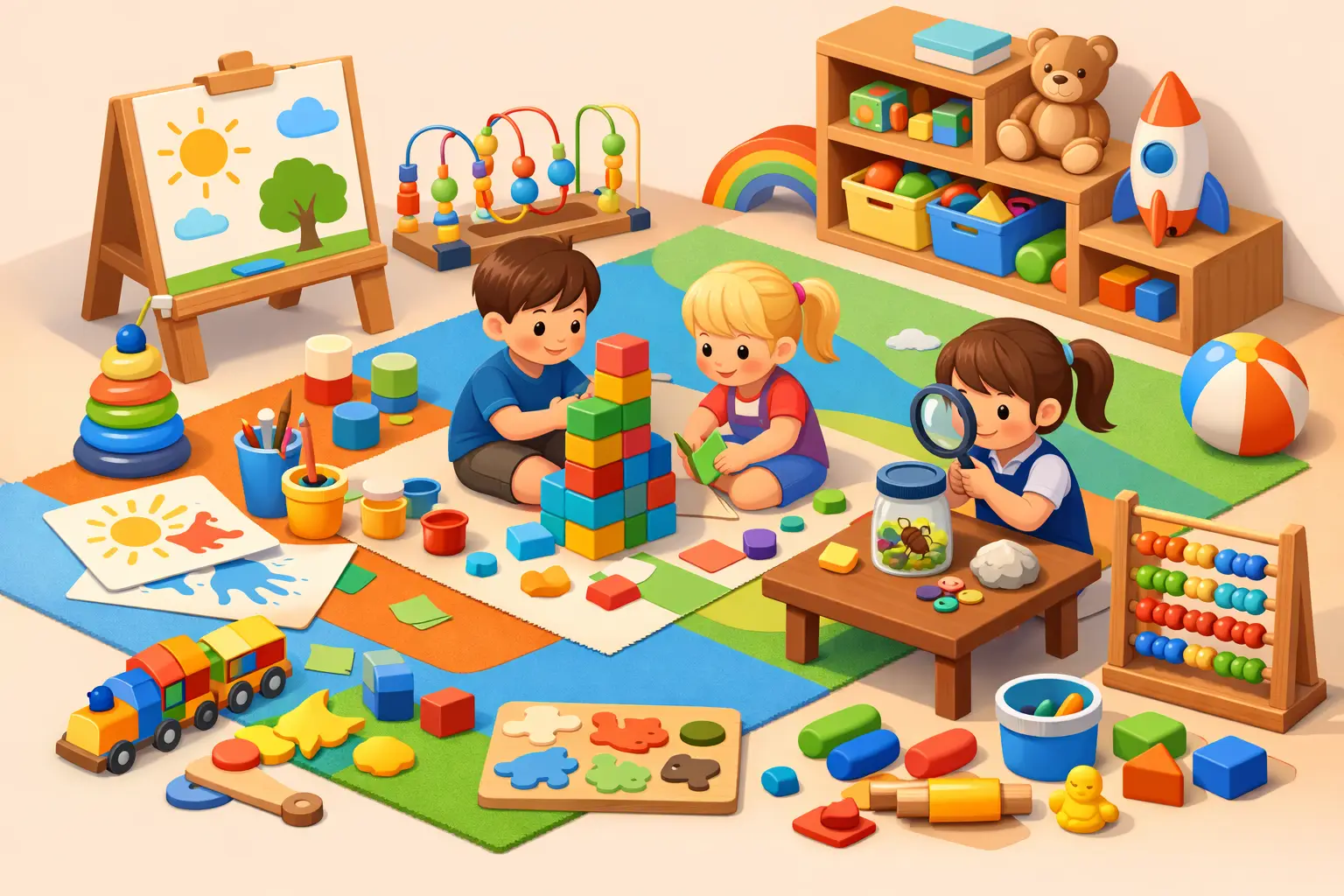
A preschooler who leaves the table after two minutes is not necessarily refusing to learn. The task may be too long, too abstract, too noisy, or simply not connected to how that child learns best. For families searching for okul öncesi etkinlikler, the most useful activities are not the flashiest printables or the busiest schedules. They are short, repeatable moments of play that give a child a clear purpose, a manageable challenge, and a chance to feel capable.
For children with attention differences, early learning differences, sensory preferences, or big feelings, the setup matters as much as the activity itself. A five-minute game that ends with pride can support more learning than a 30-minute task that ends in frustration.
What Makes Preschool Activities Worth Repeating?
Preschool learning is built through repetition, movement, conversation, and relationships. Young children are still developing the ability to wait, switch tasks, listen through distractions, and recover when something feels hard. An activity works best when it lets them practice one or two of these skills without demanding all of them at once.
Before choosing an activity, ask one simple question: what do I want my child to practice today? The answer might be listening for a sound, using both hands together, taking turns, naming feelings, or staying with a task a little longer. This keeps the goal realistic and helps you notice progress that worksheets can miss.
The right level of challenge depends on the child. Some preschoolers enjoy novelty and need a new twist each day. Others participate more readily when the materials, steps, and expectations stay familiar. Neither approach is better. The useful choice is the one that helps your child engage without becoming overwhelmed.
Okul Öncesi Etkinlikler That Support Core Skills
1. The sound detective game
Choose a sound, such as /m/, and invite your child to find objects around the room that begin with it. A mug, marker, map, or stuffed monkey can become evidence in their investigation. Say the word slowly and let your child hear the first sound before deciding.
This game builds early phonological awareness, vocabulary, and listening. Keep it playful. If your child says an answer that does not match, respond with curiosity: “Let’s stretch the first sound together.” The goal is noticing, not getting every answer right.
For a child who finds verbal tasks demanding, begin with two objects placed in front of them. For a child ready for more challenge, ask them to sort items by beginning sound or invent a silly sentence using their discoveries.
2. A movement path with a purpose
Use painter’s tape, pillows, or paper spots to create a simple route across the floor. Your child might hop to the red circle, crawl under a chair, balance along a tape line, then place a beanbag in a basket. Give one direction at a time at first.
Movement paths can support body awareness, following directions, planning, and attention. They are especially useful when a child has spent time sitting, seems restless, or needs a transition between activities. The point is not perfect coordination. It is the practice of listening, moving, pausing, and trying again.
Change only one element when you repeat the game. You could add colors, count jumps, or ask your child to create a path for you. Too many new rules at once can turn a regulating activity into a stressful one.
3. The two-minute helper job
Many preschool skills grow during ordinary household routines. Ask your child to match socks, spray water on a cloth and wipe a small table, sort spoons and forks, or put books into a basket by size. Set a short timer if your child responds well to a visible finish line.
Helper jobs develop sequencing, hand strength, responsibility, and confidence. They also offer a meaningful alternative when a child resists activities that feel like school. Instead of asking, “Do you want to practice sorting?” you can say, “I need your expert help organizing these.”
Start with a job your child can complete successfully. Independence grows when children experience that their contribution matters, not when they are repeatedly corrected for doing it differently.
4. Story pauses instead of story tests
Read a short picture book and pause once or twice to wonder aloud. “That character looks worried. What do you think happened?” “Where do you think they will look next?” Let your child point, act out an answer, or respond with a single word.
This supports language, perspective-taking, memory, and emotional vocabulary without turning reading into a quiz. If your child wants to reread the same book every night, that repetition is valuable. Familiar stories free up attention for new details, new words, and new ways of joining the conversation.
Children who struggle to sit through a book may do better while holding a small fidget, lying on the floor, or helping turn pages. Engagement does not have to look like stillness.
5. Build, copy, then create
Make a small block structure with three to six pieces and invite your child to copy it. Once they finish, ask them to make a new version and explain what changed. If blocks are not appealing, use magnetic tiles, cups, recycled boxes, or paper shapes.
This activity encourages visual attention, planning, spatial language, and flexible thinking. It also shows you how your child approaches a challenge. Do they begin with the biggest piece? Do they watch carefully before starting? Do they abandon the task after one mismatch? These observations are more useful than comparing their work to another child’s.
When frustration rises, reduce the number of pieces rather than taking over. You can say, “Let’s find one piece that matches first.” A smaller next step protects momentum.
A Better Rhythm Than a Packed Schedule
Parents often feel pressure to fill the day with educational tasks. Preschoolers usually benefit more from a dependable rhythm: a little movement, one shared activity, free play, a practical task, and plenty of unstructured time. Free play is not empty time. It is where children test ideas, practice language, and build persistence on their own terms.
A simple activity rotation can prevent decision fatigue. Keep a small basket with crayons, paper, child-safe scissors, stickers, blocks, and a few sensory materials. Rotate only a few items every week so the options feel fresh without becoming overwhelming. If a child repeatedly returns to one material, follow that interest. A child lining up cars may be practicing order, categories, comparison, storytelling, or calming repetition.
Screens can also be part of family life, but they work best when they do not replace hands-on exploration, sleep routines, movement, or connection. After a screen-based activity, offer a related real-world extension. If your child watched something about animals, invite them to sort animal figures, draw a habitat, or move like different animals across the room.
How to Adapt When Your Child Says “No”
A refusal is information. It may mean the activity is too difficult, the instructions are unclear, the child needs movement first, or they want more control. Rather than pushing through, adjust one variable.
Offer a choice between two materials. Shorten the task. Let your child begin while you join in. Replace verbal directions with a quick demonstration. Or use a “first, then” statement: “First we put three blocks in the box, then we choose the music.” These changes can make participation feel possible without lowering your expectations for growth.
Avoid measuring a good activity only by how long your child stayed seated. Notice whether they returned after a break, accepted help, used a new word, completed one more step, or smiled at something that used to feel hard. Those are meaningful signals of developing confidence and readiness.
Make Progress Visible Without Making It Heavy
Keep a small weekly note on your phone or a paper calendar. Write down one thing your child enjoyed, one skill they practiced, and one adjustment that helped. For example: “Loved the tape path. Followed two directions when shown first. Needed fewer turns.” Over time, these notes create a clearer picture of patterns, preferences, and growth.
If you use brain-training wellness practices as part of your family’s broader learning routine, these everyday observations can also help you choose activities that match your child’s attention, energy, and interests. Individual results may vary.
The most powerful preschool activity may be the one your child asks to do again tomorrow. Keep it short, make room for laughter, and let each small attempt tell your child: learning is a place where you belong.