




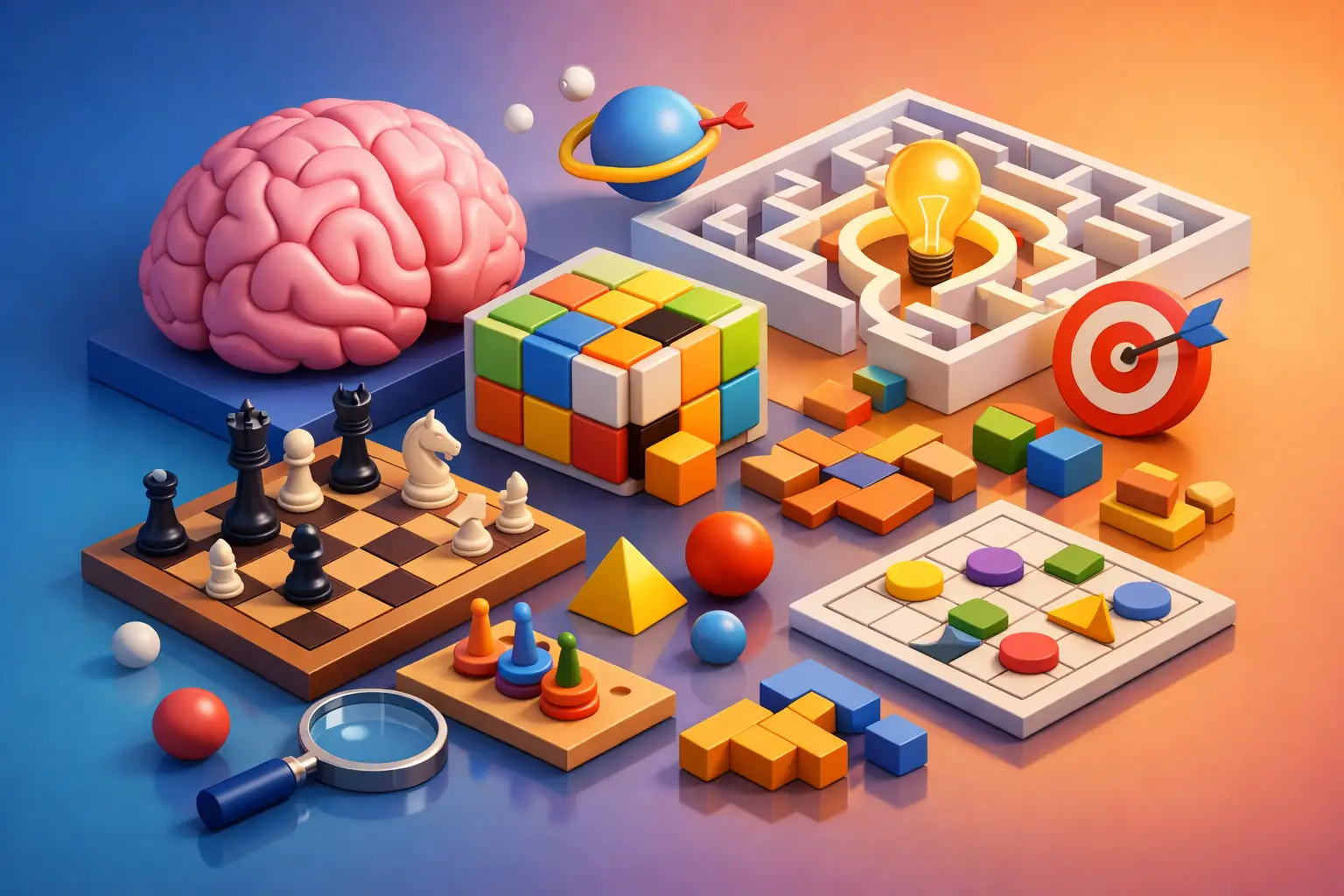
A child who avoids a worksheet may spend 15 focused minutes solving a visual puzzle, spotting a pattern, or remembering a sequence. That difference matters. Ücretsiz zeka oyunları can give families a low-pressure way to practice attention, working memory, flexible thinking, and persistence – especially when traditional homework already feels demanding.
The goal is not to fill every spare minute with another screen activity or expect a game to solve a learning challenge. The better goal is simpler: create small, repeatable moments in which your child can experience effort, strategy, and progress without feeling judged. For children with attention differences, reading challenges, or learning differences, that sense of success can be as valuable as getting the answer right.
What free brain games can realistically support
Brain games are activities that ask a child to notice, remember, plan, compare, or adapt. A matching game may use visual memory. A maze can call on planning and impulse control. A word-pattern challenge may encourage language awareness. The skill practiced depends on the game design, the child’s age, and how the activity is used.
Free games work best as a wellness and educational practice, not as a replacement for school support, professional guidance, sleep, movement, or family connection. One child may love rapid number puzzles; another may become frustrated by time limits but stay engaged with spatial challenges. This is why choosing the right format matters more than simply choosing the most popular game.
A helpful game usually has three qualities. It is clear enough that the child can begin independently, challenging enough to require thought, and short enough that success is possible before attention drops. When those elements come together, practice feels less like another task on the family schedule.
How to choose ücretsiz zeka oyunları by skill
Rather than searching for a single “best” game, begin with the skill you want to invite into the day. This gives your child a more meaningful choice and helps you notice what kinds of challenges feel motivating.
For attention and self-control
Look for games with simple rules and short rounds: visual search activities, spot-the-difference puzzles, go/no-go style challenges, or card games where children wait for a matching cue. These activities can encourage a child to pause, scan, and respond with intention.
Avoid assuming that faster is always better. Timers can add excitement for some children, but they can also create pressure. If your child starts guessing, rushing, or shutting down, turn off the timer if possible and focus on accuracy or strategy instead.
For working memory
Sequence games, memory cards, pattern copying, and “repeat the order” challenges are practical choices. Ask your child to describe the strategy they used: “Did you group the colors?” or “Did you make a story to remember the pictures?”
That conversation is not a test. It helps children recognize that memory can be supported by strategies, rather than being something they either have or do not have. A child who says, “I can’t remember anything,” may benefit from seeing small evidence that a method helped.
For flexible thinking and problem-solving
Logic grids, mazes, block puzzles, tangrams, and sorting challenges can be especially useful here. They invite children to try one approach, notice when it does not work, and try another. For a child who gets stuck quickly, choose puzzles with several difficulty levels rather than presenting the hardest version first.
You can model flexible thinking without taking over: “That path was a smart idea. It hit a dead end, so what could we test next?” This language shifts the moment away from failure and toward experimentation.
For language and reading confidence
Word searches, rhyme games, letter-pattern activities, categories, and story-building prompts can make language practice playful. For children with dyslexia or reading differences, prioritize games where the pace is adjustable and instructions are easy to understand. A game should not depend on decoding long, complex directions before the child can participate.
Sometimes an oral version is the better version. Try naming items in a category, inventing a silly story with three random words, or finding words that begin with the same sound. Free does not have to mean app-based.
Screens are a tool, not the whole routine
Many free brain games are digital, and that can be convenient. A phone or tablet can offer quick access, visual feedback, and a variety of difficulty levels. But free apps often come with trade-offs: advertisements, distracting design, locked features, frequent notifications, or an endless-scroll structure that makes stopping harder.
Before offering a new game, play it yourself for two minutes. Check whether ads interrupt play, whether the game asks for unnecessary information, and whether the difficulty changes in a sensible way. If the game rewards repeated tapping more than thoughtful choices, it may not match your purpose.
Offline options can be just as effective. A deck of cards, a printed maze, matching pairs made from household objects, or a family game of “What changed in the room?” can create the same kind of cognitive challenge while adding connection. The best balance depends on your child. Some children are more engaged by a screen; others regulate better with hands-on materials.
A 15-minute routine that does not feel like homework
Consistency matters more than long sessions. A realistic routine might be one short game after school, before dinner, or during a calm weekend window. Start with 10 to 15 minutes, then stop while the activity is still going reasonably well.
Begin by letting your child choose between two activities you have already approved. Too many choices can be overwhelming, while no choice can trigger resistance. After the game, ask one specific question: “What was tricky?” “What helped you finish?” or “Which level would you choose next time?”
Keep a simple progress note once or twice a week. Do not record only scores. Notice behaviors such as staying with a puzzle longer, asking for a second try, using a new strategy, or recovering after a mistake. These are meaningful signs of engagement and growing self-awareness.
If a child becomes upset, lower the difficulty, play cooperatively, or switch to a different skill. Persisting through every frustrating activity is not the lesson. Learning when to pause, reset, and return later is also part of healthy brain-training practice.
What parents should not expect from brain games
Free games can be a useful addition to a child’s routine, but they are not a shortcut to academic change. Improvement in a specific game does not automatically transfer to reading, classroom focus, or daily organization. Transfer is more likely when game practice is paired with real-life opportunities to use the same skill.
For example, after a planning puzzle, invite your child to plan the steps for packing a school bag. After a memory game, ask them to remember three items for a grocery trip. After a visual search game, turn tidying up into a “find and sort” challenge. These small bridges help make the skill feel relevant beyond the game itself.
At Auto Train Brain, we view structured brain-training wellness practices as one possible part of a broader, parent-guided routine. The most useful approach is measured and observant: choose age-appropriate activities, protect downtime, and pay attention to what helps your child feel capable.
Not a medical device – does not replace physician advice. Individual results may vary.
Tonight, choose one game that lasts no longer than 15 minutes and sit nearby for the first round. Your child may not need a perfect score. They may simply need a moment to discover, “I can try a different way.”