




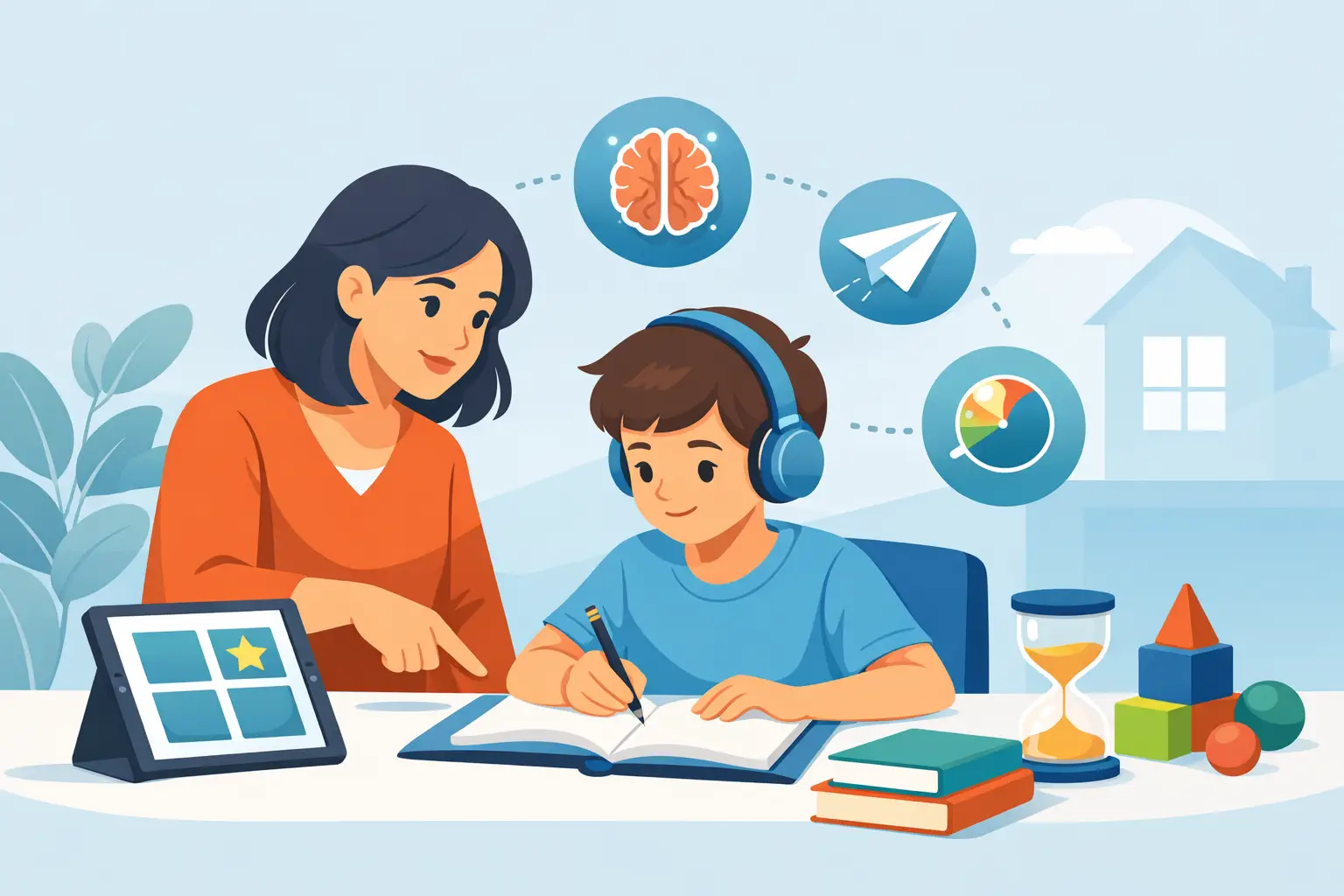
A child sits at the table for homework, reads the first line, then drifts. Two minutes later, the pencil is rolling, the chair is squeaking, and the lesson is gone. For many families, this is not a rare moment. It is the daily pattern that makes schoolwork harder, reading slower, and confidence more fragile. That is why attention training for kids at home has become a serious topic for parents who want more than reminders to “try harder.”
The first thing parents need to hear is simple: attention is not just a behavior problem. In many children, especially those with ADHD, dyslexia, autism, or other learning differences, attention is a brain-based skill that can be strengthened with the right kind of repetition, feedback, and support. When the training is structured and measurable, home can become a practical setting for real progress.
What attention training for kids at home should actually mean
A lot of home-based advice sounds easy but falls apart in real life. “Reduce distractions” is helpful, but it is not enough for a child whose brain struggles to sustain focus even in a quiet room. True attention training is more specific. It aims to improve how long a child can stay engaged, how quickly they recover after distraction, and how consistently they complete cognitive tasks.
That matters because attention affects more than classroom behavior. It shapes reading accuracy, reading speed, listening, working memory, and comprehension. A child who cannot hold focus long enough to process a sentence may appear uninterested, oppositional, or careless when the deeper issue is cognitive regulation.
This is where many families lose time. They work harder on motivation when the real need is targeted training.
Why some children need more than routines and reward charts
Routines help. Sleep helps. Clear expectations help. But for children with persistent attention challenges, these tools often improve the environment more than the underlying skill.
That is an important distinction. A calm desk, shorter study sessions, and visual schedules can reduce daily friction. They can make homework more manageable. But if a child still loses track of instructions, skips lines while reading, or cannot maintain mental effort, the family may need an intervention that is more direct and more evidence-based.
In those cases, the most effective home programs usually share three features. They are repeated regularly, they provide immediate feedback, and they track change over time. Without those elements, parents often rely on guesswork. And guesswork creates more anxiety because progress feels unclear.
The science behind home attention training
The reason attention can improve is neuroplasticity – the brain’s ability to adapt through repeated experience. This is not a motivational slogan. It is the scientific basis for many cognitive training approaches.
When a child practices tasks that require sustained focus, inhibition, and processing control, the brain is being asked to organize itself more efficiently. The key is that practice must be targeted. Repetition alone does not guarantee improvement. If the activity is too easy, the brain is not challenged. If it is too hard, the child disengages.
That is why feedback matters so much. In structured systems, the child receives an immediate signal about performance, which helps reinforce productive attention patterns. Some advanced approaches use EEG-based neurofeedback to read brain activity and provide visual or auditory feedback in real time. This gives families something ordinary home exercises cannot offer – a direct, measurable training loop connected to how the child is regulating attention in the moment.
For parents, this changes the conversation. Instead of asking, “Why won’t my child focus?” the question becomes, “What kind of training is helping my child build focus more effectively?”
How to build an effective attention routine at home
The most successful home programs are not long. They are consistent. Children with attention difficulties usually do better with shorter, structured sessions than with broad demands to sit still for extended periods.
Start with predictability. Training should happen at roughly the same time each day, ideally when the child is alert rather than already mentally exhausted. For some children that means late afternoon after a short break. For others, early evening works better. It depends on age, school load, sensory profile, and energy regulation.
The environment still matters, but only as a support layer. Keep visual clutter low, reduce background noise, and limit device-related distractions unless the training itself is digital. Then focus on one task at a time. Multitasking is usually a fast path to frustration.
Just as important, parents should avoid turning every home moment into correction. Constant reminders like “pay attention” or “focus” often increase pressure without improving the skill. A better approach is to use a structured system where the child can experience success, receive feedback, and gradually tolerate longer cognitive effort.
Which methods work best
Not all attention training is equal, and this is where families need clarity. Paper worksheets, memory games, breathing exercises, and movement breaks can all have value, but they serve different purposes.
Movement-based activities are useful when a child needs regulation before sitting down. Breathing and sensory calming strategies can lower emotional overload. Traditional brain games may support task engagement for some children. But if the goal is measurable change in sustained attention, reading efficiency, and learning performance, families often need a more specialized method.
EEG-based neurofeedback is one of the strongest options when parents want a non-drug, structured, and trackable approach. It works by monitoring brain signals and giving the child immediate feedback during training. Over time, this helps reinforce more effective attention patterns. For families who want a safe and side-effect-free solution that can be used at home with professional guidance, this model is especially relevant.
A system such as Auto Train Brain reflects that direction. It combines EEG-based training, home use, and expert follow-up in a way that speaks to what many parents actually need – not another generic tip sheet, but a guided process with measurable cognitive targets.
What progress should look like
Parents often expect attention gains to appear as instant stillness. That is rarely how real improvement looks. Early progress is usually more functional than dramatic.
A child may return to a task faster after distraction. Reading may become less effortful. Instructions may need fewer repetitions. Homework time may shorten because mental drifting decreases. These are meaningful changes because they affect everyday academic life.
Some children improve quickly in one area and more slowly in another. A child with dyslexia, for example, may show better reading endurance before reading accuracy fully improves. A child with ADHD may become more consistent in completing tasks before emotional regulation settles. Progress is rarely perfectly linear.
This is why measurement matters. Families need more than a feeling that things are “a little better.” They need objective signs that attention span, task persistence, and learning performance are moving in the right direction.
When parents should seek a more structured solution
If home strategies have been tried for months with limited change, it may be time to move beyond general advice. The same is true if attention problems are affecting reading comprehension, school confidence, emotional well-being, or family relationships.
A structured solution is especially worth considering when a child can focus on high-interest activities but repeatedly breaks down during reading, writing, listening, or academic tasks. That pattern often signals that the issue is not effort alone. It is the ability to regulate attention under demand.
Parents should also take persistent signs seriously: frequent task abandonment, extreme distractibility, slow reading, missed instructions, inconsistent academic output, and visible frustration around learning. These are not small habits to outgrow on their own in every case.
The good news is that families do not have to choose between doing nothing and pursuing overwhelming interventions. There is a middle path – evidence-informed, home-based, and professionally supported.
Attention training at home works best when it is safe, guided, and measurable
Parents carry enough uncertainty already. They should not have to guess whether an approach is helping. The strongest home-based attention programs reduce that uncertainty by offering a clear structure, regular use, expert input, and performance tracking.
That combination matters because attention is deeply connected to school success and self-belief. When a child begins to focus longer, read with less strain, and complete tasks with less conflict, the change reaches beyond academics. Home becomes calmer. The child feels more capable. Parents stop feeling like every evening is a battle.
If your child struggles to stay engaged, the goal is not perfection. It is progress you can see, support you can trust, and a training path grounded in how the brain actually learns.