




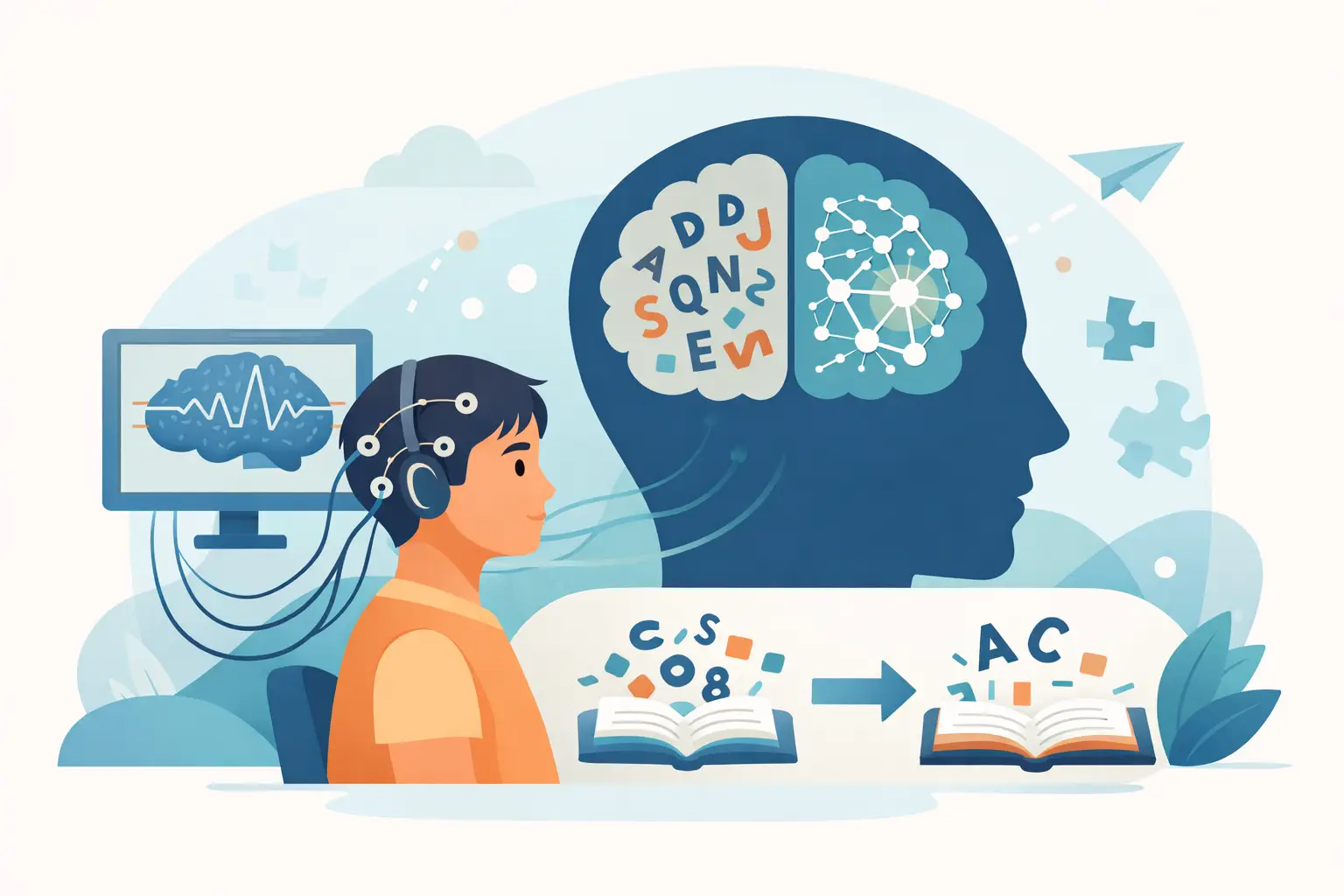
A child who knows the answer out loud but freezes when the words are on the page can leave parents feeling helpless fast. That is usually when the question becomes very specific: does cognitive training help dyslexia, or is it just another promise that sounds good when your family is already under pressure?
The honest answer is that cognitive training is not a magic fix for dyslexia. But for some children, it can be a meaningful part of a broader support plan – especially when reading struggles are tied to attention, working memory, processing speed, or mental fatigue. The value is not in replacing structured reading instruction. The value is in supporting the brain functions that often make reading practice more effective, more sustainable, and less exhausting.
What cognitive training involves day to day
In real life, parents are not asking about theory alone. They want to know whether their child will read more comfortably, understand more of what they read, and feel less defeated by homework. That is the right standard.
Cognitive training is a training method based on brain activity. Using EEG signals, the system reads patterns of brain function and provides visual or auditory feedback in real time. The goal is not to force the brain. It is to help the brain learn more efficient regulation through repetition, consistency, and neuroplasticity.
For dyslexia, this matters because reading is not just a school skill. It depends on multiple cognitive systems working together. A child may struggle with phonological processing, but also with concentration, visual attention, task persistence, or speed of response. When these areas are weak, reading support alone may not feel enough. That is often where cognitive training becomes relevant.
Research in this area is promising, but parents should expect nuance. Some studies and published observations suggest improvements in attention control, reading fluency, error rates, and comprehension for certain children. At the same time, outcomes vary. Dyslexia is not identical from one child to another, and a method that helps one child significantly may help another more modestly.
What cognitive training can and cannot do
It helps to be very clear here. Cognitive training does not teach phonics the way a reading specialist does. It does not replace educational intervention, classroom accommodations, or professional evaluation. If a program claims it can cure dyslexia on its own, that claim should be viewed carefully.
What cognitive training may do is strengthen the brain’s self-regulation capacity. In practice, that can support better attention span, improved readiness for reading tasks, reduced mental overload, and more consistent performance. These changes matter because children with dyslexia often do not struggle only with decoding. They also struggle with staying engaged long enough to apply strategies, monitor mistakes, and maintain comprehension.
This distinction is important for families. The strongest results usually come when cognitive training is part of a structured plan that may also include reading intervention, parent guidance, and specialist follow-up. That approach is both more realistic and more structured.
Why experiences differ so widely
Parents often compare stories and ask why one child improves quickly while another needs more time. The answer usually comes down to profile, consistency, and measurement.
A child whose dyslexia is accompanied by attention difficulties may benefit more visibly from cognitive training than a child with isolated reading difficulty and strong attention control. Another child may show gains first in homework tolerance, listening, or reading stamina before there is a clear change in reading speed. These are not small details. They tell you whether the training is influencing the underlying systems that support learning.
Age also matters, though not in a simple way. Younger children may respond well because the brain is highly adaptable, but they also need routines and family support to stay consistent. Older children may be better able to engage with the process and report changes, but they may also have a longer history of frustration that affects confidence and motivation.
This is why serious programs focus on baseline assessment and measurable tracking rather than vague encouragement. If a family cannot see what is improving, it becomes difficult to know whether the intervention is worth continuing.
What the research says, without overpromising
The research base around cognitive training and learning difficulties is growing, especially in areas connected to attention regulation and cognitive performance. There is also academic interest in how EEG-based training may support reading-related outcomes in children with dyslexia. That is encouraging.
Still, parents should understand the current evidence correctly. Cognitive training has more established support in some areas than others. Improvements in attention, impulse control, and task regulation are discussed more often in the literature than a direct, universal effect on dyslexia itself. That does not make it irrelevant. It means the pathway of benefit may be indirect but still meaningful.
For example, if a child becomes better able to focus on text, sustain effort, and avoid rapid cognitive fatigue, reading instruction may become more productive. If comprehension improves because the child can stay mentally organized during reading, that is a real outcome even if the mechanism is not a one-step cure for dyslexia.
The safest interpretation is this: cognitive training may help some children with dyslexia, especially when related attention and regulation problems are part of the picture. It should be presented as a supportive, non-invasive training approach, not as a standalone miracle solution.
How to judge whether a program is credible
Parents in this space are often exposed to big claims and little clarity. A credible cognitive training program should explain what it measures, how often training is recommended, how progress is tracked, and what kind of expert support is included.
It should also be transparent about timelines. Meaningful change usually depends on repeated use over months, not a few sessions. Families deserve to know that consistency is part of the method, not a hidden condition discovered after purchase.
Wording matters too. You want a system that speaks in terms of measurable performance, neuroplasticity, and supervised use – not hype. When a program combines EEG-based training with professional guidance and observable indicators such as reading speed, attention, and comprehension, parents are in a much stronger position to make a sound decision.
This is one reason home-based systems have gained attention. For many families, regular access is the difference between starting and staying with a program. When training can happen at home with structured guidance and follow-up, adherence often becomes more realistic. Auto Train Brain is one example of this model, combining EEG-based cognitive training use at home with expert support and progress-focused application.
Signs that cognitive training may be worth considering
If your child has dyslexia and also shows short attention span, frequent mental drifting, strong homework resistance, slow reading despite effort, or poor reading comprehension tied to fatigue, cognitive training may be worth discussing with a qualified provider. These signs do not prove it will work. They suggest the child may have overlapping cognitive regulation needs that cognitive training is designed to target.
On the other hand, if a child has not yet received proper dyslexia assessment or structured reading support, that should come first. Cognitive training works best when it is added thoughtfully, not used as a substitute for the basics.
Parents should also ask a practical question: what would progress look like for our child in the next three months? Better focus during reading? Fewer errors? Less frustration? Faster homework completion? Clear goals make better decisions possible.
The question parents really need answered
When parents ask, does cognitive training help dyslexia, they are often asking something deeper. They want to know whether there is a structured, well-documented way to help their child learn with less struggle and more confidence.
That is the right question. Cognitive training can be a valuable option when it is evidence-aware, professionally supported, and used with realistic expectations. It is not about chasing a miracle. It is about creating better conditions for the brain to learn.
For many families, that shift matters. A child who can focus longer, regulate better, and stay engaged with reading tasks is not just performing differently. That child is beginning to experience learning as something they can do, not something they have to fear.
If you are considering cognitive training, look for safety, measurement, professional support, and a plan that respects the complexity of dyslexia. The goal is not to promise perfection. The goal is to make progress visible, meaningful, and possible.