




When a child can sit through a lesson one day and fall apart the next, families are left trying to make sense of a pattern that rarely feels predictable. That is where cognitive training often enters the conversation. Parents usually are not looking for another vague promise. They want a structured way to support attention, learning, reading, and self-regulation without adding more stress to daily life.
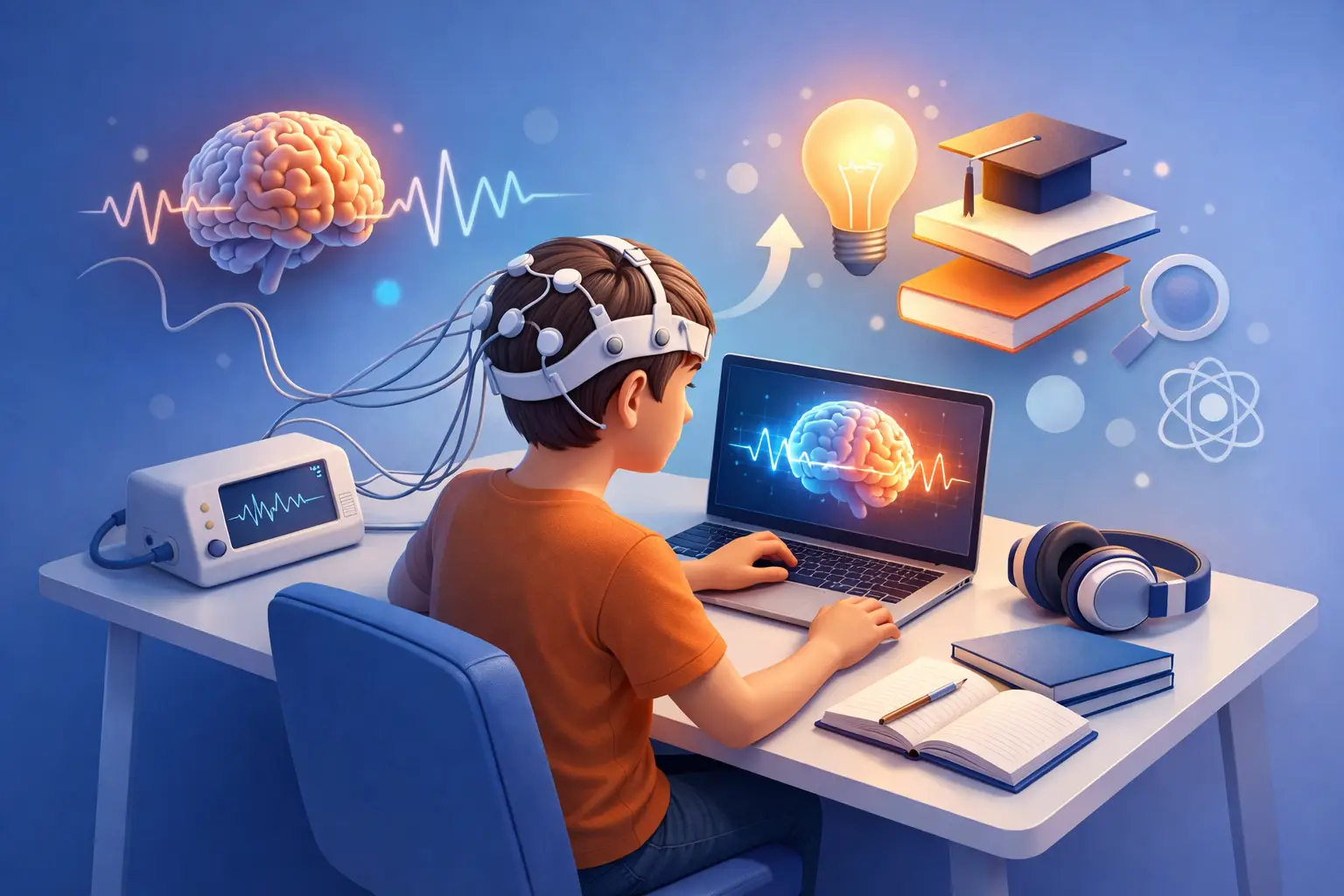
Cognitive training is generally used to describe a technology-supported process in which brainwave activity is measured through sensors placed on the scalp, then reflected back to the user in real time through visual or auditory feedback. The goal is not to force the brain to do something unnatural. The goal is to help the brain recognize more efficient patterns and strengthen them over time through repetition. This is why the method is often discussed alongside cognitive training and neuroplasticity.
For families navigating ADHD-related attention challenges, dyslexia, learning differences, autism-related regulation difficulties, or general struggles with focus and academic performance, that distinction matters. They are not just asking, “Can my child behave better?” They are asking, “Can my child build more stable attention, better learning readiness, and stronger cognitive control in a way we can track?”
What cognitive training actually does
At its core, cognitive training measures electrical activity in the brain and turns that information into immediate feedback. If a child is watching an animation, playing a structured cognitive task, or following a feedback-based activity, the system responds to the brain patterns being detected in that moment. When the brain moves toward a desired pattern, the feedback becomes more rewarding or more fluid. Over repeated sessions, the brain gets practice maintaining those more functional states.
This matters because attention is not a simple on-off switch. A child may appear distracted, but the underlying issue can involve regulation, processing speed, cognitive fatigue, impulsivity, or inconsistent arousal levels. EEG-based cognitive training does not replace educational support, psychological care, or skill-building. It can, however, complement them by targeting the neurological patterns that affect how efficiently a child engages with learning in the first place.
That is also why results differ from child to child. One family may notice improved sitting tolerance and fewer homework battles first. Another may see stronger reading stamina, better listening, or reduced emotional overload. In many cases, progress shows up in daily function before it shows up in report cards.
Who tends to be able to keep the routine
Parents often ask whether this approach is only for children with a formal diagnosis. The honest answer is that it depends. EEG-based cognitive training is often considered for children and teens with attention difficulties, dyslexia, learning challenges, autism spectrum differences, or executive functioning struggles. It may also be relevant for children who are bright and capable but consistently underperform because focus, regulation, or mental endurance break down under demand.
The most suitable candidates are usually those whose families want a structured, measurable, and non-invasive support option. This is especially relevant when parents are trying to build a more complete plan rather than relying on a single intervention. If a child is already receiving educational support, speech-language support, counseling, or skill-specific training, cognitive training may fit best as part of a broader developmental framework.
At the same time, families should avoid expecting one tool to solve every challenge. Reading comprehension, classroom behavior, sensory sensitivity, motivation, and emotional resilience do not all come from the same source. A careful assessment process is important because the value of cognitive training increases when the goals are clear.
Why families are drawn to EEG cognitive training
Most parents who explore this technology have already tried several things. They have adjusted routines, changed schools, added tutoring, spoken with specialists, or spent months trying to understand why their child can do well in some moments and struggle so much in others. What makes EEG cognitive training appealing is that it offers something many families have not had before – objective brain-based feedback tied to repeated training.
That word, objective, matters. Parents are often exhausted by guesswork. They want measurable progress, session consistency, and a clear explanation of what is being trained. They also want to know whether a method is non-invasive. One of the strongest reasons families consider this approach is that it is non-invasive and generally well tolerated. It is designed to support self-regulation through feedback, not through force.
For children, the experience also tends to be more acceptable than many parents expect. When sessions are delivered through engaging digital interfaces, the process can feel less like a clinical burden and more like a structured exercise for the brain. That does not mean children will love every session. It means the barrier to consistency is often lower when the experience is designed for real family life.
What a session record looks like over time
Parents naturally want to know how quickly they will see change. A realistic answer is that some children show early shifts in attention or regulation, while others need more time before changes become visible in everyday routines. The timeline depends on the child’s starting profile, consistency of use, the quality of the training plan, and whether the goals are well matched to the child’s actual needs.
It is also important to understand what “results” should mean. The best outcomes are not flashy one-week transformations. The more meaningful signs are gradual, stable gains such as improved task initiation, longer attention span, fewer meltdowns around schoolwork, stronger follow-through, better reading persistence, and more confidence. These are the changes that tend to matter most at home and in school.
Progress tracking is essential here. Families should be able to see whether the process is moving in the right direction through observations, performance markers, and structured follow-up. In more advanced systems, EEG data may be paired with cognitive and behavioral insights to build a clearer picture of improvement over time. That kind of monitoring gives parents something they rarely get from generic focus programs – evidence that the process is not random.
Is cognitive training safe?
For many parents, safety comes before everything else, and rightly so. Cognitive training is considered a non-invasive approach because it reads brain activity and provides feedback. It does not introduce electrical stimulation into the brain. That point alone helps reduce a lot of confusion.
Parents also want to know about side effects. In well-designed cognitive training settings, the method is generally described as non-invasive and suitable for repeated use under proper guidance. That said, a child’s comfort, fatigue level, and engagement still matter. If a program is poorly matched to the child, too demanding, or used inconsistently, the experience may become frustrating even if the method itself remains non-invasive. Good implementation matters just as much as good technology.
Home-based use and access
One of the biggest practical barriers for families is not motivation. It is logistics. Weekly travel, school schedules, therapy calendars, and parent work hours can turn even the best support plan into something hard to sustain. That is why home-based cognitive training has become so relevant.
When cognitive training can be used at home with a guided system, families often find it easier to stay consistent. A headset records brain activity, a mobile device delivers real-time feedback, and the process can be supported with expert review and progress monitoring. This model makes the training more accessible and often more realistic for families who need support to fit into ordinary life, not the other way around.
For some children, home use also reduces performance pressure. They can train in a familiar setting rather than in a space that feels unfamiliar or overstimulating. That can make a real difference, especially for children who are already carrying the emotional weight of school struggle.
Choosing an EEG-based program with confidence
Not every brain-training claim deserves trust. Families should look for a program built on academic research, professional insight, and measurable tracking rather than broad promises. The questions worth asking are simple. Is the system EEG-based or just marketed that way? Is progress monitored in a structured manner? Is there expert guidance? Are the goals personalized? Does the process fit the child’s age, profile, and learning needs?
This is where a scientifically grounded ecosystem matters. When EEG cognitive training is supported by cognitive assessment, educational insight, and expert follow-up, parents get more than a device. They get a framework for decision-making. That can reduce uncertainty and help families stay focused on what they actually need – structured support that fits daily life and aims for measurable change.
Auto Train Brain reflects this broader model by combining EEG-based cognitive training with guided use, family-centered implementation, and a clear focus on attention, learning, and cognitive performance. For parents who have been searching for a non-invasive way to support their child’s development, that combination is often what turns curiosity into confidence.
If you are considering cognitive training, the best next step is not to ask whether it is a miracle. It is to ask whether it is the right fit for your child’s specific pattern of attention, learning, and regulation. That is where real progress begins.