




The hardest part for many parents is not getting a diagnosis. It is watching a bright child struggle with focus, schoolwork, routines, and confidence – then wondering what to do next. If you are searching for non medication ADHD treatment for kids, you are likely looking for something safe, evidence-based, and realistic for daily family life.
That search makes sense. Medication helps some children and can be an appropriate part of care, but many families want to understand what else is available. Sometimes they want to avoid side effects. Sometimes they are not ready to start medication. Sometimes they want a broader plan that supports attention, self-regulation, and learning in a more measurable, skill-based way.
What non medication ADHD treatment for kids really means
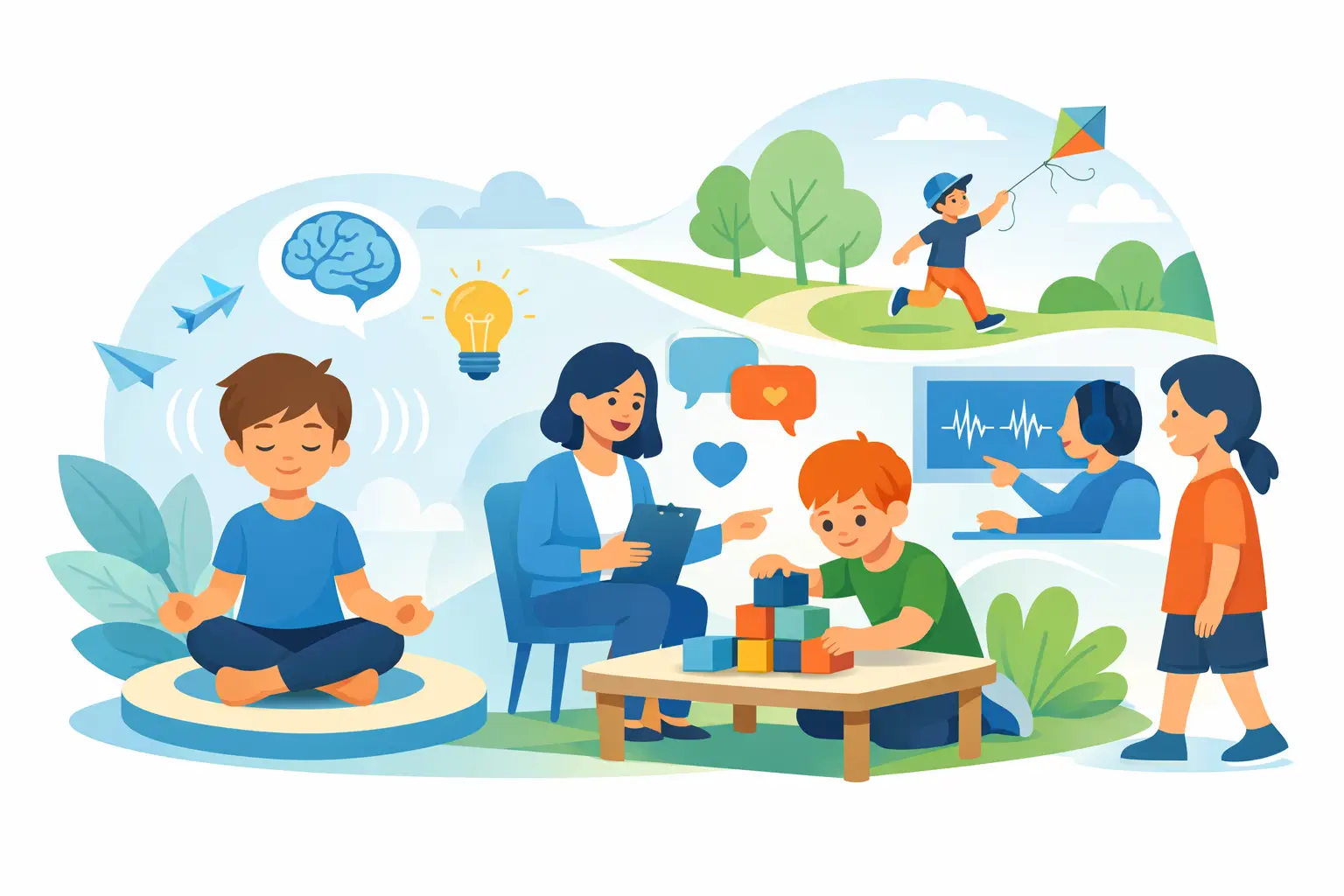
Non medication treatment is not one single method. It is a group of approaches designed to improve how a child manages attention, impulses, routines, learning demands, and emotional regulation without relying only on medication. The strongest plans are structured, consistent, and built around the child’s actual needs.
This matters because ADHD does not look the same in every child. One child may be constantly moving and interrupting. Another may appear quiet but miss instructions, lose track of tasks, and fall behind in reading or homework. A treatment plan that works well usually targets the specific area of difficulty rather than using a one-size-fits-all approach.
For families, the best question is often not, “What is the one natural fix?” It is, “Which safe and proven supports can improve my child’s day-to-day performance and quality of life?”
When families look beyond medication
Parents usually start exploring alternatives for clear reasons. Appetite changes, sleep issues, irritability, or emotional ups and downs can make medication feel difficult to sustain. In other cases, a child may show partial improvement, but still struggle with reading comprehension, organization, or classroom stamina.
There is also a deeper concern many families carry. They do not just want fewer disruptive behaviors. They want stronger focus, better school participation, more independence, and a child who feels capable again. That is why non-medication care should not be framed as doing less. Done well, it is often about doing more targeted work.
The most effective non-medication options
Behavior therapy remains one of the most established approaches, especially for younger children. It helps parents and caregivers use consistent responses, clearer expectations, and practical routines that reduce friction at home. This can improve compliance and lower daily stress, but it works best when adults can apply the strategies steadily over time.
School-based support is also essential. Seating changes, shorter instructions, extra processing time, movement breaks, and academic accommodations can make a meaningful difference. These supports are valuable, but they often manage the environment more than the underlying attention skill itself.
Parent coaching can be highly effective because ADHD affects the whole family system. When parents understand what triggers dysregulation and how to structure tasks better, mornings, homework, and bedtime often improve. The limitation is that coaching depends heavily on follow-through, and exhausted families may struggle to maintain consistency without additional support.
Sleep, physical activity, and nutrition matter as well. Poor sleep can intensify inattention and emotional reactivity. Regular movement can help with regulation. Balanced nutrition supports overall brain function. Still, these are foundational supports, not usually complete stand-alone treatments for moderate or significant ADHD symptoms.
Then there are brain-based training approaches, including neurofeedback. This area draws attention because it focuses on how the brain regulates attention rather than only on visible behavior. For families who want a non-invasive, side-effect-free option with measurable progress tracking, this can be especially appealing.
A closer look at neurofeedback for ADHD
Neurofeedback is based on a simple principle. The brain can learn. Using EEG technology, brain activity is measured in real time, and the child receives visual or auditory feedback that helps reinforce more optimal attention patterns. Over repeated sessions, the goal is to support better self-regulation through neuroplasticity.
For parents, the practical question is whether this is just another trend. The answer depends on the system being used and the level of clinical structure around it. Neurofeedback should not be presented as magic. It requires regular use, proper guidance, and realistic expectations. But when it is delivered through a scientifically grounded system, it can offer something many families are looking for – a safe, measurable intervention aimed at attention development itself.
This is where quality matters. A serious program should be based on EEG data, designed for home use without sacrificing structure, and supported by professional oversight. Families tend to do better when the process includes setup guidance, progress monitoring, and expert input from clinicians who understand attention and learning challenges.
Why measurable progress matters in non medication ADHD treatment for kids
Parents are often told to wait and see. The problem is that vague improvement is hard to trust when your child is already losing confidence at school. A stronger care model looks for measurable changes: sustained attention, reading speed, reading comprehension, task completion, fewer reminders, and more consistent daily routines.
That is one reason many families are drawn to technology-supported interventions. They want to know whether a program is actually helping, not just whether it sounds promising. Evidence-based support should make progress visible.
For a child with ADHD, this can be powerful emotionally as well as academically. Better focus does not only improve homework. It can reduce frustration, support self-esteem, and help the child experience success more often. Those gains tend to ripple into family life, peer relationships, and school participation.
What to look for before choosing a program
Not every alternative treatment deserves equal confidence. Parents should be cautious with methods that rely on broad promises but offer little structure, little clinical explanation, or no meaningful progress tracking. If a program cannot explain how it works, who it is appropriate for, and how results are monitored, that is a concern.
A stronger option is one that is safe, side-effect-free, and built on academic research and clinical logic. It should also fit real family life. If a treatment is too difficult to maintain, even a good concept can fail in practice.
This is why home-based systems with expert support have become more relevant. Families need solutions that are accessible, guided, and consistent enough to sustain over months rather than days. When a program combines technology, structured use, and clinician involvement, adherence is usually better.
One example in this space is Auto Train Brain, an EEG-based neurofeedback training system designed for home use and supported by doctor and psychologist consultations. For families seeking a science-based, non-invasive path that emphasizes measurable cognitive development, that model aligns closely with what many parents are actually asking for.
What results are realistic
A trustworthy article should say this clearly: results vary. Age, symptom profile, learning differences, family consistency, sleep quality, and coexisting issues all affect progress. A child with primarily inattentive symptoms may respond differently than a child with stronger impulsivity, anxiety, or reading-related challenges.
That said, realistic goals often include better attention span, improved task persistence, stronger learning readiness, and better academic engagement over time. Some families notice smoother routines first. Others notice school-related gains first. The timeline is rarely overnight, which is why structured programs with regular follow-up are so important.
The best non-medication approach is often not an either-or decision. It may include parent strategies, school support, and a brain-based training system working together. That combination can reduce pressure on the child while building practical and cognitive skills at the same time.
Making a decision without panic
Parents under stress are often pushed toward extremes – either avoid all treatment or expect one solution to fix everything fast. Neither approach is especially helpful. ADHD care works better when decisions are calm, informed, and based on what your child needs now and what will support long-term development.
If you are considering non medication ADHD treatment for kids, focus on three questions. Is it safe? Is it evidence-based? Can progress be tracked in a meaningful way? Those questions cut through a lot of noise.
Your child does not need hype. Your child needs support that is structured, credible, and realistic enough to improve daily life one measurable step at a time. That is where real progress usually begins.