



Friday at 4pm: How to Land Instead of Crash

If you spend Friday evenings flattened on the couch, your body is asking for a softer landing than full collapse. Here is what helps.
If you spend Friday evenings flattened on the couch, your body is asking for a softer landing than full collapse. Here is what helps.
After-school restraint collapse hits ADHD kids hardest. Here is what is happening in the brain at 4pm, and what genuinely helps.
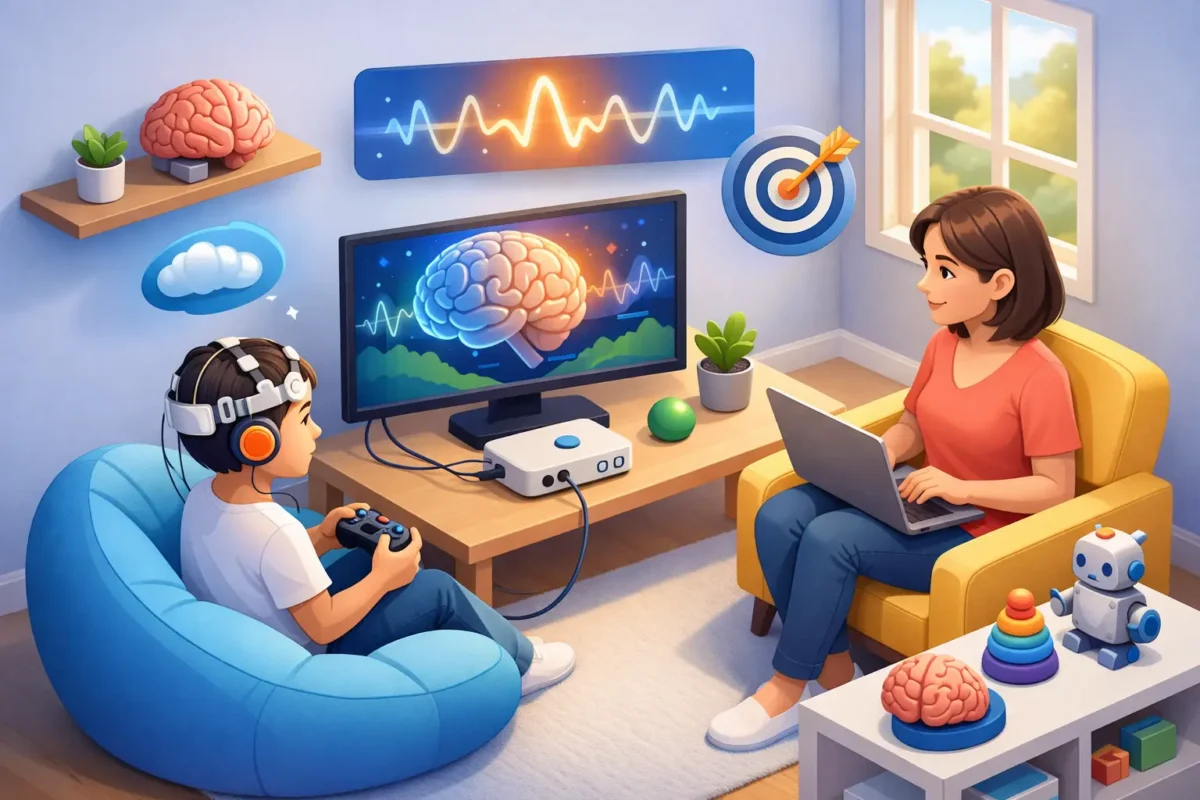
A practical guide to at-home cognitive training for parents: how it works, who it fits, what a session involves, and what to compare when looking at options.
Back-to-back meetings, open offices, and constant notifications are hammering the American workforce. Here’s what’s happening in your brain — and how neurofeedback builds a buffer.
The invisible work of remembering, planning, and anticipating for everyone is real labor. Here is how to name it before it crushes you.
Not all summer screen time is equal for ADHD kids. A 3-question filter helps parents pick apps and shows that protect focus.
Brainwave data complements HRV and sleep tracking. What EEG measures that other biosignals cannot, and how to think about layering it in.

A parent guide for dyslexia support with practical steps, school tips, and evidence-based ways to build reading skills and confidence.
One in three U.S. adults wakes up around 3 a.m. with their heart racing and their mind in a loop. Here’s the neuroscience behind it — and how neurofeedback retrains the brain to stay asleep.
Forgetting why you walked into the kitchen by Wednesday is not a moral failure. It is a depleted attention system asking for help.