




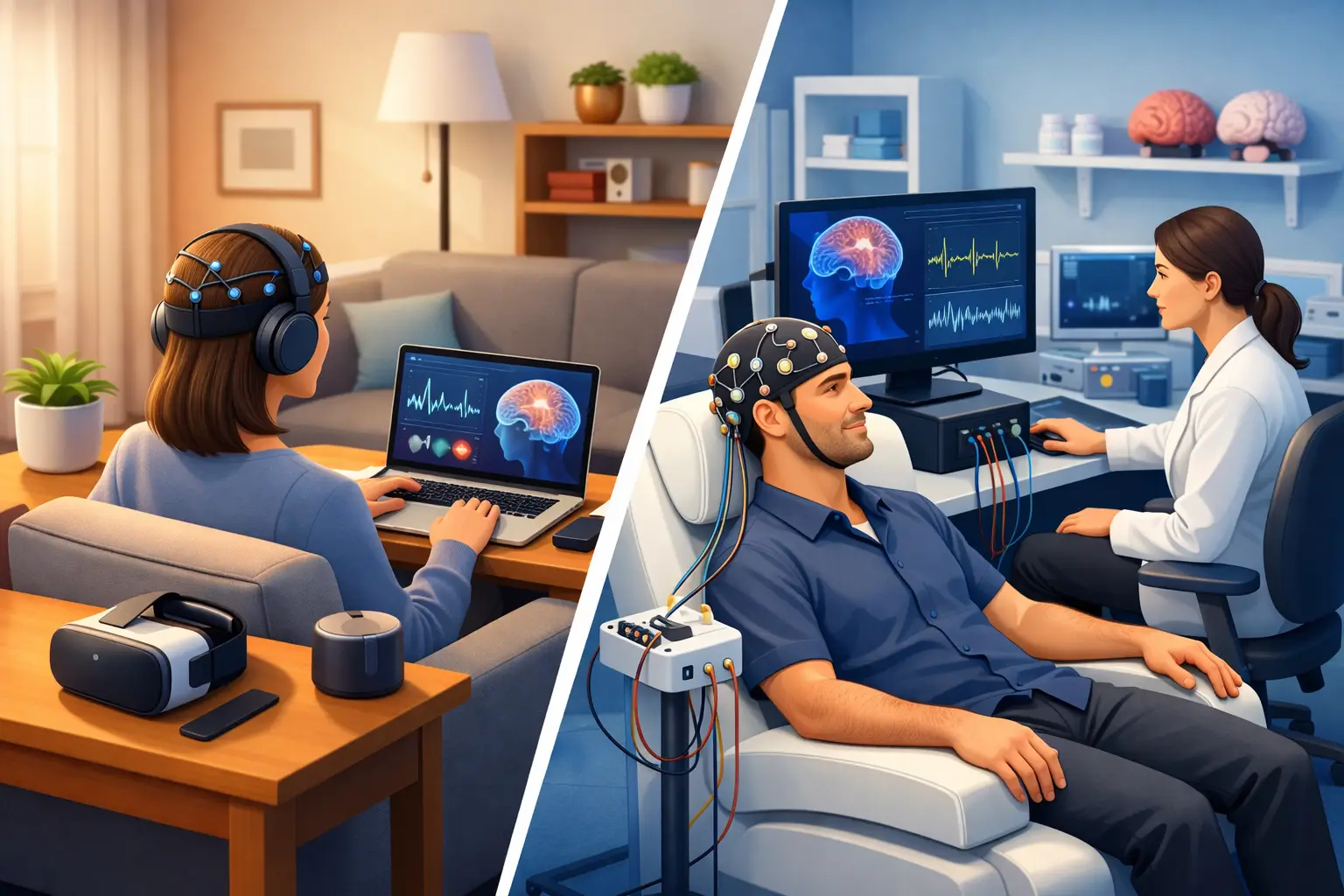
When a child struggles to focus, read fluently, or stay regulated through the school day, families usually want one thing – a solution that is safe, measurable, and realistic to sustain. That is exactly why the question of home neurofeedback vs clinic comes up so often. Parents are not just comparing locations. They are comparing consistency, guidance, comfort, and the likelihood that a program will actually fit into daily life.
Neurofeedback uses real-time brain signal data, typically through EEG, to provide feedback that helps the brain practice more efficient patterns. The principle behind it is neuroplasticity – the brain’s ability to adapt through repeated experience. For families navigating attention issues, dyslexia, learning differences, or autism-related regulation challenges, that idea is compelling. But the format matters more than many people expect.
Home neurofeedback vs clinic: the real difference
The simplest version is this: clinic-based neurofeedback happens in a professional setting with on-site supervision, while home-based neurofeedback is completed remotely using equipment and software designed for use outside the clinic. That sounds straightforward, but the real difference is not the room. It is the rhythm of the program.
In a clinic model, sessions are scheduled around travel, school, work, traffic, and provider availability. For some families, that structure is helpful. The appointment exists, the child shows up, and the session gets done. In a home model, the biggest advantage is access. The child can train in a familiar space, often at more convenient times, with less disruption to the household.
That convenience is not a small detail. Neurofeedback depends on repetition and consistency. A strong protocol completed regularly often matters more than a theoretically ideal plan that becomes hard to maintain after the first few weeks.
Why families often prefer home-based training
Many children perform differently at home than they do in a clinic. A child who is anxious in new environments, fatigued after school, or overstimulated by travel may not show their most typical attention patterns during a clinic visit. At home, the environment is more natural. That can make sessions easier to complete and less emotionally taxing.
For parents, the practical relief is just as important. Multiple weekly visits can place real pressure on work schedules, sibling logistics, and family energy. When training can happen at home with a structured system and expert oversight, consistency usually improves. And when consistency improves, progress is easier to observe and track.
This is especially relevant for families supporting children with attention difficulties or reading challenges. Gains in focus, task initiation, listening stamina, or reading endurance usually develop over time. A model that reduces missed sessions gives that process a better chance.
When clinic-based neurofeedback may be the better fit
Home-based neurofeedback is not automatically the best choice for every family. Some children benefit from the clear separation of a clinic setting. Walking into a dedicated environment can help them understand that this is a focused activity, not just another screen-based task at home.
Clinic care may also feel more reassuring to parents who are new to EEG-based systems and want face-to-face guidance at every step. If a family is unlikely to manage setup, scheduling, or routine at home, an in-person structure may support better follow-through.
There is also a human factor. Some children respond well to direct interaction with an on-site professional. That external accountability can improve participation, especially in the early phase of a program.
So the right question is not whether clinic is better than home in general. It is whether your child is more likely to complete the program consistently, calmly, and correctly in one setting over the other.
Safety, supervision, and the quality question
Parents often worry that home-based systems might feel less rigorous than clinic care. That concern is understandable. But the safety and value of neurofeedback do not depend only on where it happens. They depend on how the system is designed, how progress is monitored, and whether expert guidance remains part of the process.
A well-structured home program should never feel like being left alone with a headset and vague instructions. Families need clear onboarding, easy-to-use software, session guidance, and regular expert review. That combination matters because neurofeedback is most effective when it is not just frequent, but also tailored and monitored.
This is where evidence-based design becomes essential. EEG-driven feedback, progress tracking, and professional interpretation create a very different experience from generic brain-training tools. Families should look for systems that emphasize measurable change, structured support, and safe, non-invasive use.
For many parents, the strongest reassurance is knowing that home use does not have to mean reduced oversight. With the right model, it can mean better access to expert-guided training without the weekly burden of commuting.
Home neurofeedback vs clinic for attention and learning challenges
For children with ADHD-related attention issues, dyslexia, learning differences, or broader cognitive performance concerns, the decision often comes down to sustainability. These families are rarely managing just one appointment. They may already be balancing tutoring, school meetings, occupational support, or speech and language sessions.
In that context, a home-based format can remove one of the biggest barriers to progress: friction. Less travel means less resistance. Less resistance means more sessions completed. More completed sessions create a stronger opportunity for measurable gains.
That does not mean clinic programs are less valid. It means real life matters. A program that looks excellent on paper but constantly gets postponed may not serve the child as well as a safe, guided system that fits naturally into the family routine.
Children with sensory sensitivities may also do better at home, where lighting, sound, and seating are familiar. On the other hand, children who struggle with boundaries at home may engage more seriously in a clinic. These trade-offs are normal. The best decision is the one that respects both neuroscience and family reality.
What parents should compare before deciding
Instead of asking which format sounds more advanced, ask which one supports repeatable results. Start with session frequency. How often will your child realistically complete training over the next three months? Then look at oversight. Who reviews progress, adjusts the process when needed, and helps you understand what changes to watch for?
Also consider the child’s temperament. Do they settle more easily at home, or do they focus better in structured environments? Think about your own capacity too. A home-based solution should make life easier, not place the full burden on the parent.
Finally, ask how progress is measured. Families deserve more than general encouragement. They need a system that tracks development in ways that are visible and meaningful, whether that means attention stability, reading persistence, regulation, or day-to-day functional improvements.
The format matters less than the follow-through
There is no universal winner in home neurofeedback vs clinic. What creates results is a combination of scientific structure, regular use, and a format your family can actually sustain. For many modern families, home-based neurofeedback offers a powerful advantage because it removes barriers without giving up guidance. For others, clinic structure may support better commitment.
The strongest choice is usually the one that aligns with your child’s profile, your schedule, and the level of expert support built into the program. That is why more families are moving away from the idea that care must happen in a clinic to be credible. When a home-based system is grounded in EEG data, guided by experts, and designed for consistency, it can be both practical and highly effective.
At Auto Train Brain, this shift matters because families do not need more complexity. They need a safe, evidence-informed path that fits real life while supporting measurable cognitive growth.
If you are deciding between home and clinic, trust the option your child can actually continue. Progress rarely comes from the most impressive setup. It usually comes from the plan that your family can keep showing up for.